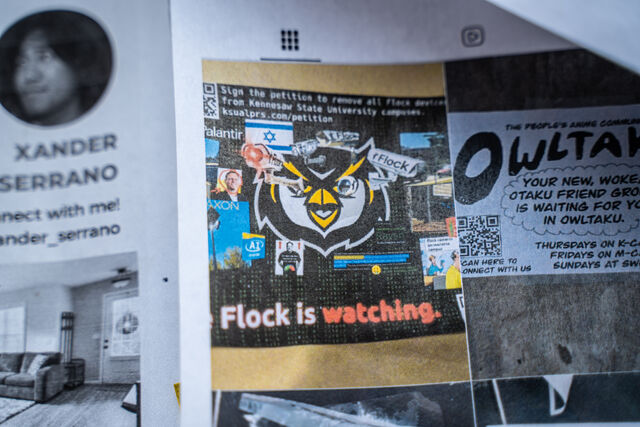
Students at Kennesaw State University are raising concerns about the university’s use of Flock Safety surveillance technology, questioning how vehicle data is collected, who can access it and what oversight the university maintains.
The concerns have helped fuel DeFlock KSU, a student-led effort calling for the removal of Flock devices from KSU’s campuses. The group has shared information about the technology, documented device locations and encouraged students to support its petition.
Isaac Thoman, a junior computer science major and member of the group, said his concerns began after he noticed Flock devices around Marietta campus and started researching how they operated.
“I started to form a stronger opinion when I was walking from the Stingers to the Atrium building and I saw a weird black device,” Thoman said. “I saw it was Flock branded.”
Thoman said further research led him to questions about the company’s Raven devices, which are designed for acoustic detection. He became concerned after learning about Flock’s plans to expand the technology’s sound detection.
Flock Safety manufactures automated license plate reader cameras that capture vehicle information, including license plates and images of vehicles. The company also produces Raven acoustic detection devices. The technologies serve different functions.
Thoman said one of his primary concerns is how data collected by the cameras is stored and accessed. He argued that when information is processed through the company’s system, the university may have limited visibility into how outside agencies use it.
“I think that creates a safety concern when KSU has no insight into that,” Thoman said.
KSU has defended its oversight of the technology, stating that its current controls, contractual requirements and oversight provide meaningful accountability for access to automated license plate reader records. The university also said changes to Flock Safety’s audit logging do not eliminate that accountability.
Thoman, however, questioned whether those safeguards provide the university with enough visibility into how outside agencies access the data. He said he is worried about the university’s ability to monitor who searches the system and why.
Jesus Quinones, another student who opposes the cameras, said he is concerned about organizations collecting information about people’s daily movements.
“I think especially big organizations having a lot of this data on us, like where we go every day, our license plates, I am very against that,” Quinones said.
Noah Sensing, a student and member of DeFlock KSU also questioned why the university uses the technology if, as he believes, university administrators have limited access to its data.
“I don’t understand why KSU has them, if they don’t have access to the data,” Sensing said.
Sensing also raised concerns about the cost of the devices and whether students were adequately informed before their installation. However, the total cost of KSU’s deployment, including equipment, software, microphones and service fees, requires confirmation through university records.
The debate reflects broader questions surrounding the use of automated license plate readers by public institutions. Supporters of the technology point to its potential use in investigations involving stolen vehicles and other public safety concerns. Critics question how long vehicle data is retained, how widely it is shared and what safeguards prevent misuse.
For DeFlock KSU, the issue extends beyond the presence of cameras on campus. Thoman said the group wants greater control and accountability over the technology and the information it collects.
As students continue to question the university’s use of Flock devices, the debate centers on how KSU balances public safety with privacy, transparency and oversight.