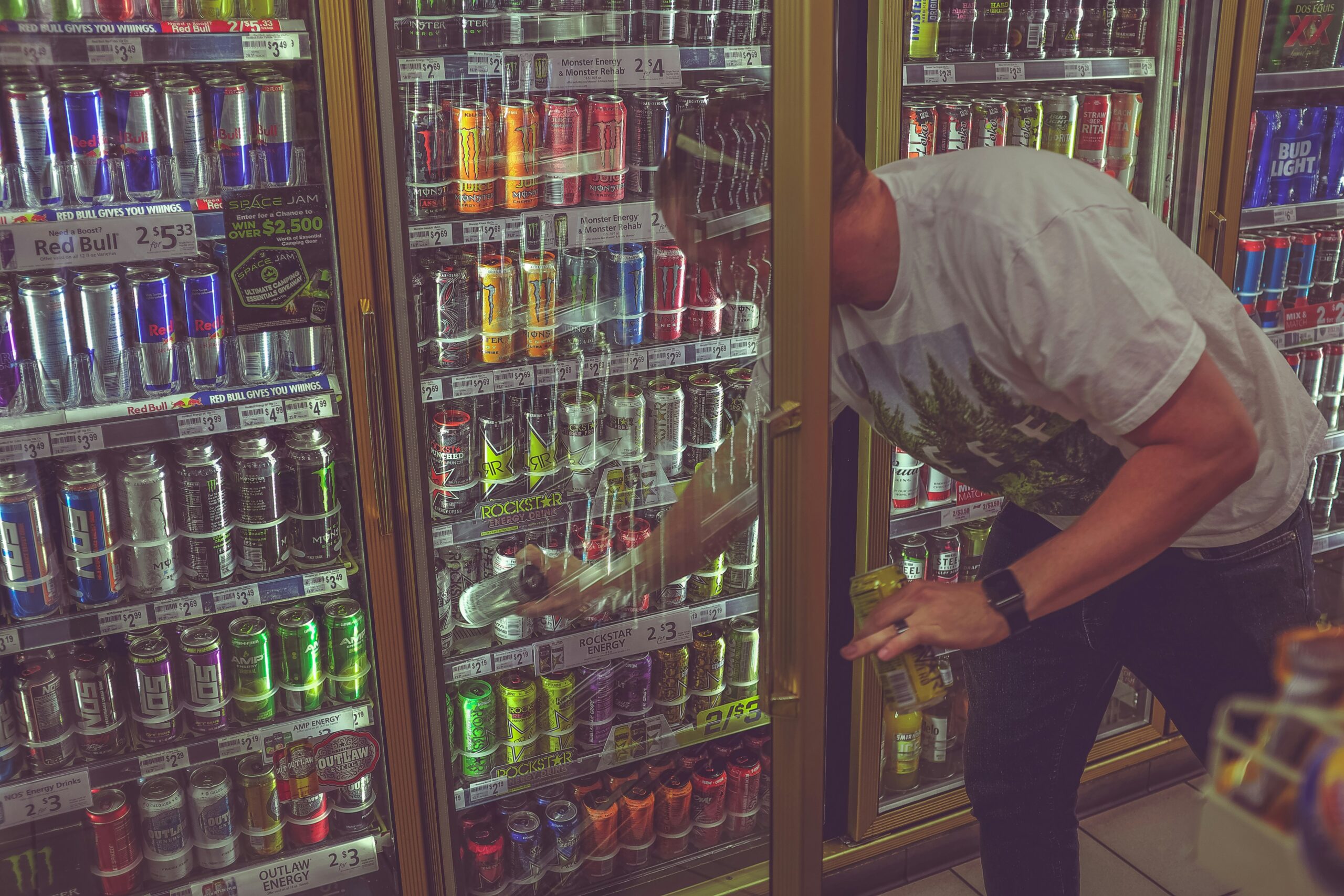
Man grabbing drink for cooler. April 18, 2017. Photo Credit: Kenny Eliason on Unsplash
There is an unhealthy obsession with energy drinks. Drinks like Monster Energy, Red Bull, Celsius and Alani are everywhere, and people are starting their morning with them instead of real meals.
Many believe that these drinks are giving them long lasting energy. However, energy drinks often contain high levels of caffeine and added ingredients that can cause way more harm than good when consumed regularly.
These drinks are marketed in a way that makes them seem like a healthier or more exciting option than coffee or tea. Bright cans, fun flavors and words like “zero sugar” make them more attractive to consumers.
However, even sugar-free versions still contain large amounts of other stimulants. Some cans contain as much caffeine as multiple cups of coffee.
Too much caffeine can lead to anxiety and sleep problems, especially in young adults.
This marketing also reaches social media, where influencers on platforms like TikTok and Instagram constantly promote brands like Alani and Celsius. Content creators show energy drinks as a normal and even necessary part of everyday life.
Because of this, people are influenced to try them without fully understanding the health risks.
Still, energy drinks are a cheaper and more convenient source of caffeine than expensive coffee shops like Starbucks. They are widely available and accessible, and for college students and young adults, convenience is vital.
The target audience for these drinks is usually young adult between 18-34 years old, which examples why they are so common on college campuses.
This age group is more likely to be influenced by trends and social media marketing. As a result, energy drinks are now part of a lifestyle.
Some consumers even use them to replace breakfast, thinking it will save time while also giving them energy. Skipping real food for caffeine is not a good habit, and it should not be encouraged by the rhetoric that energy drinks are healthier than other options.
While occasional use may not be harmful, daily reliance on energy drinks is not a healthy solution. Instead, people need to focus more on sleep and proper nutrition.
Energy drinks are not the answer, and treating them like one only creates bigger health problems over time.
Consumers need to educate themselves on the risks of energy drinks before drinking them regularly, and companies need to be transparent about what they are marketing to young adults.