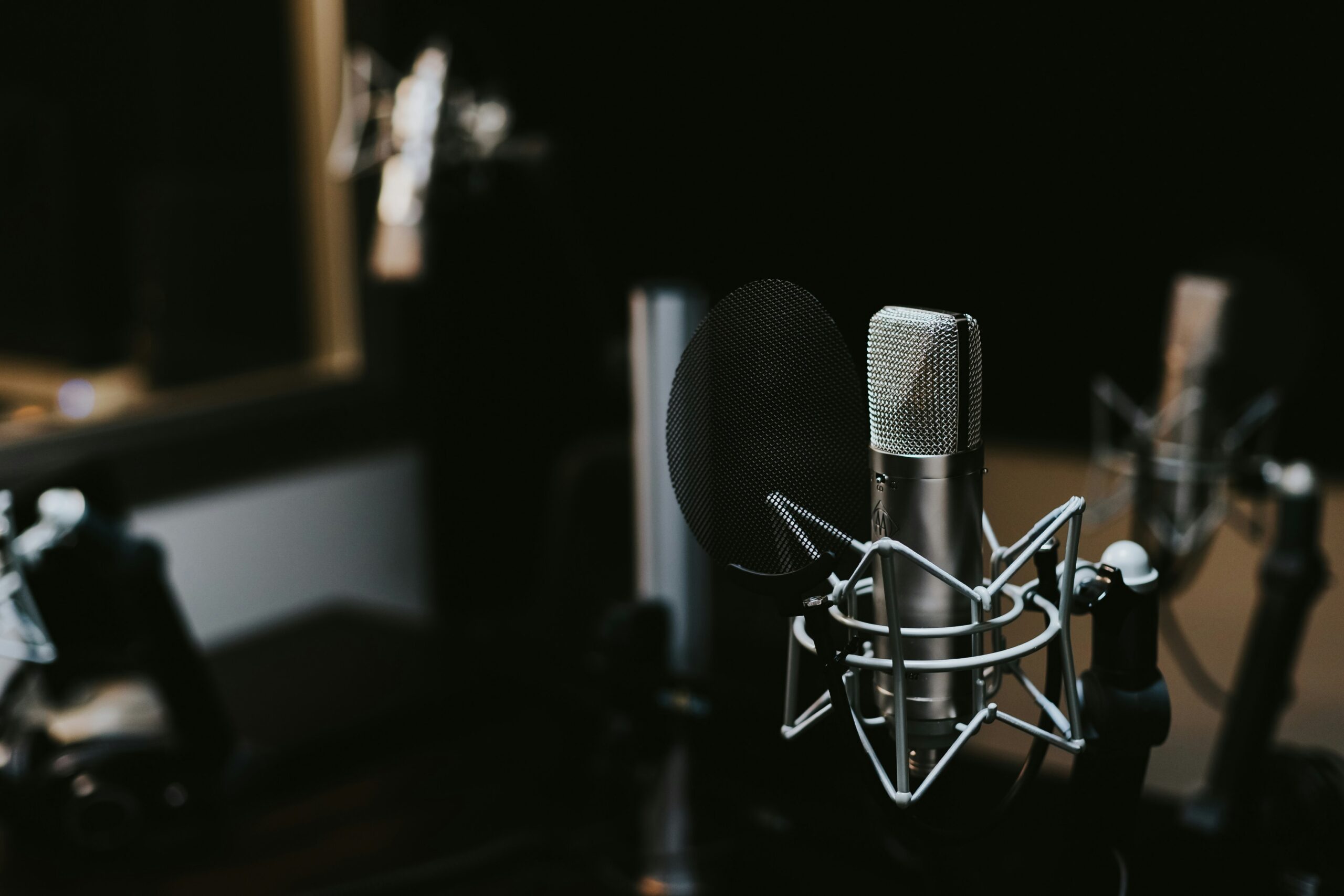
Condenser microphone in a studio. November 9, 2016. Photo Credit: Jonathan Velasquez on Unsplash
The quick rise of British rappers in the United States has created a debate about the authenticity of their growth.
With UK artists like Fakemink, EsDeeKid and Feng so prevalent on playlists, social media and stages, many wonder if their newfound expansion is organic.
Some listeners question how these artists seem to appear overnight on major playlists and festival lineups without the years of grinding that British rappers historically needed to build their careers.
The rapid growth sparked conversation online about whether these rappers are “industry plants,” artists who gain popularity though marketing from their record labels while intentionally disguising their man-made rise to fame.
There is a racial undertone to the push of these artists. Even though rap and hip-hop are rooted in Black culture, only non-Black rappers are being marketed this heavily.
Kennesaw State University student Kynaali Skerritt said the trend reflects a broader pattern within the industry.
“In a newer age of rap, many new artists being pushed are non-Black,” Skerritt said. “UK rap is already very culturally different than American rap, so the fact that the same phenomenon is happening in another rap culture is unfair.”
Black rappers like Lancey Foux, YT and Fimiguerrero took a lot longer to receive recognition. They spent years “paying their dues” while others went mainstream after a single album.
With how aggressively UK rappers are being promoted in the United States, some fans also question why the industry is prioritizing these artists over American-born ones.
American rappers like Osamason, Che and Nettspend who are currently at the top of the U.S. underground have made music for years to perfect their sound, but they are still not being pushed as heavily as the UK rappers.
Their popularity came from strong, “cult-like” followings, constant releases and shows.
Social media and streaming platforms make it easier for international artists to reach American fans. However, the rapid promotion of EsDeeKid, Feng and Fakemink has led to skepticism.
U.K. rap deserves the recognition, and the inclusion of other cultures in rap helps the genre evolve. Still, the current promotional strategies make the industry feel uneven.
When artists who spent years building their audience receive less exposure, it creates a sense of imbalance in the rap scene.
The industry should balance its approach to promoting artists, pushing a wider range of artist instead of focusing on a small few can help preserve the authenticity.
As U.K. rap continues to expand, the conversation of representation, fairness and industry influence will more than likely remain an important part of the discussion.