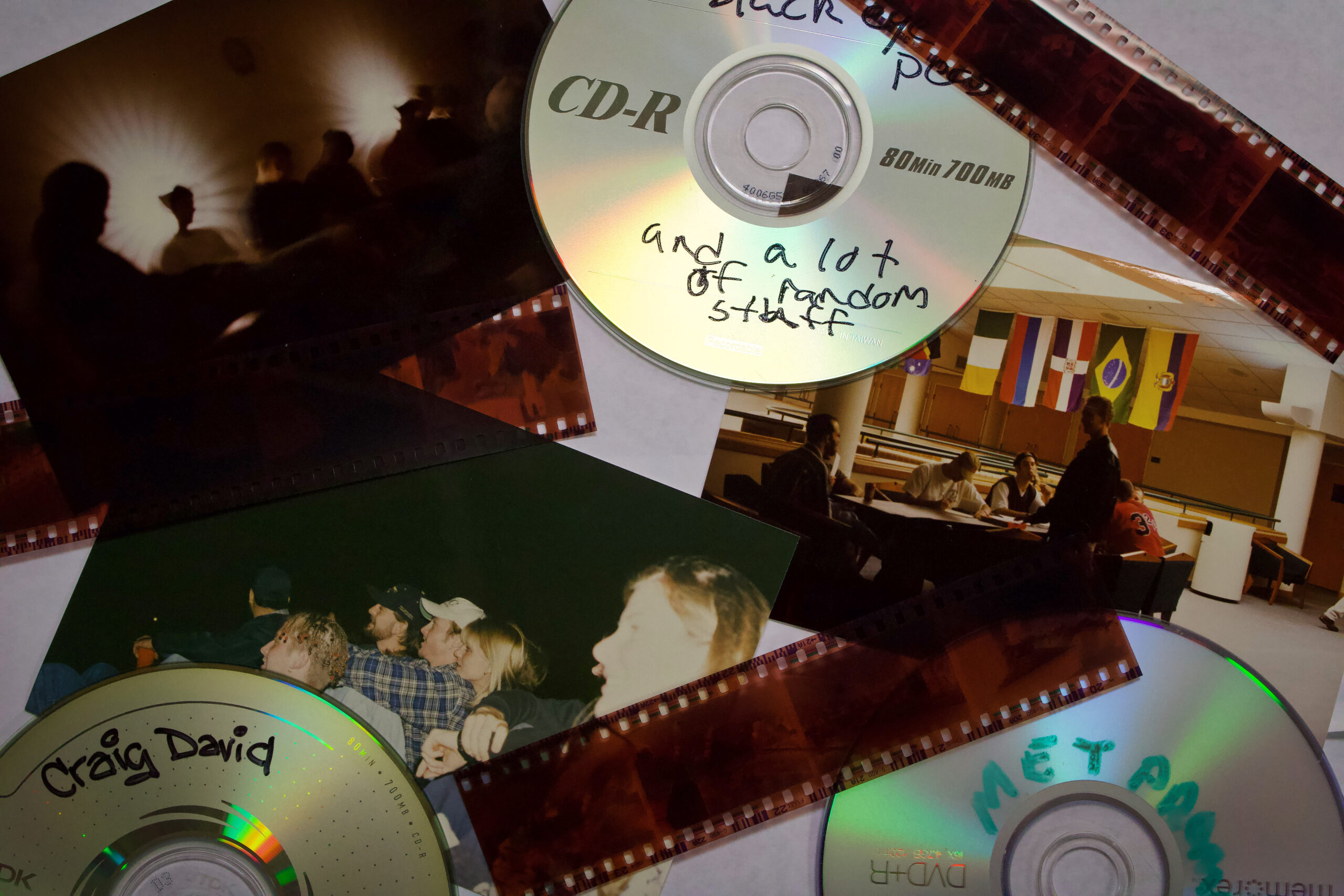
Collage of film negatives, Cd’s, and old Sentinel prints. February 11, 2026. Photo Credit: Tye Brown/The Sentinel
The rapid decline of physical media over the past two decades, from compact discs (CDs) and DVDs to printed books and film photography, has often been framed as an inevitable casualty of the digital revolution.
As society continues to expand digitally, streaming platforms and digital downloads have reshaped how we access media for instant availability and low cost.
Although there is no denying that physical media has lost mainstream dominance, recent trends show not just lingering relevance but a resurgence, especially among younger consumers.
Rather than letting physical media disappear, we must preserve and reinvest in it for the sake of cultural ownership, authenticity and societal well-being.
The decline of physical media began in the late 2000s as music, movies and books migrated online. CDs that once sold more than 162 million units annually in the early 2000s plummeted to a fraction of that by 2024.
Streaming became dominant with overwhelming library sizes. Yet the very convenience that fueled digital media’s rise has also exposed its limitations. Consumers never truly own what they stream, as licensing terms change and entire titles can disappear from platforms without warning.
Younger generations, especially Gen Z, are spearheading a trend of “bringing back physical media” not out of pure nostalgia but a desire for authenticity and permanence.
Due to digital fatigue, these young consumers are drawn to analog experiences because they offer tangibility, presence and escape from algorithm-driven interactions.
Polaroid cameras, printed photo albums and vinyl collections are not just aesthetic choices. To Gen Z, they represent a conscious rejection of a wholly digital existence.
Beyond individual preference, this shift carries broader implications for society.
First, physical media embodies ownership in a way digital never can. When one purchases a book or a record, it becomes a permanent part of one’s personal narrative.
This media becomes something that can be displayed, gifted and passed down. That tangible legacy is increasingly cherished in an era where digital libraries can vanish overnight.
Physical media also supports creators more directly.
Grammy-winning and independent artists alike rely on residuals and tangible sales in ways that streaming royalty formulas often fail to deliver.
Furthermore, physical collections from carefully arranged shelves of books to curated vinyl stacks carry meaning and identity that digital playlists and watch lists do not.
Critics argue that physical media is environmentally regressive or impractical. However, many formats are recyclable, and the social value of preserving culture, supporting artists and maintaining diversity in media consumption outweighs the argument for digital exclusivity.
Physical media is not just a throwback fad. Its comeback shows that people still crave something real, lasting and tangible in a world that feels temporary and excessively digital.
If we let physical media disappear, we lose an important balance to a screen-dominated culture. It shouldn’t just survive. It should be actively valued and maintained as part of how we share and preserve culture.