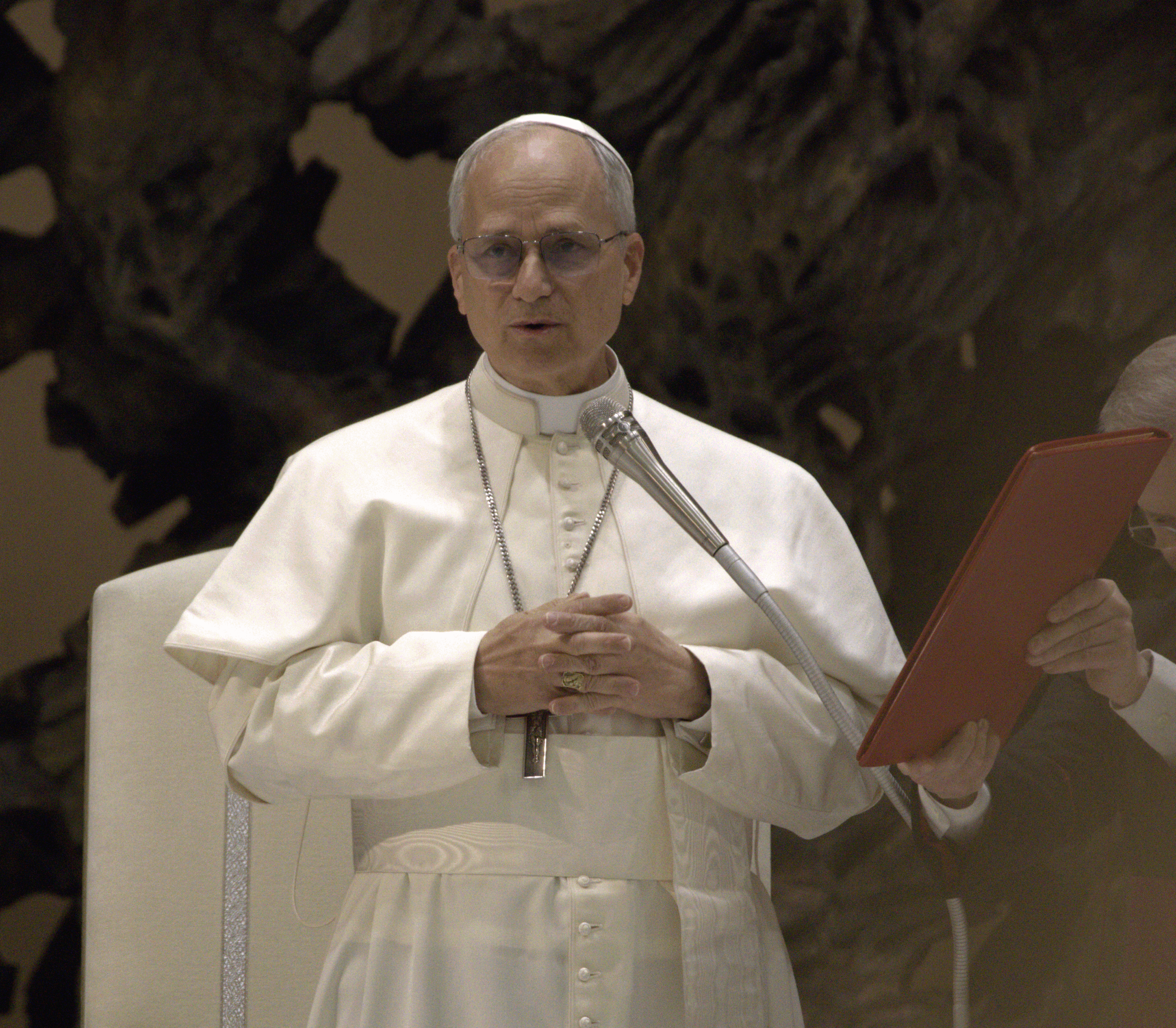
Pope Leo XIV during an audience with the media, May 12, 2025. Photo Credit: Edgar Beltrán/The Pillar
Early on, Pope Leo has made it clear that his vision for the Catholic Church will center human dignity above politics or economics.
Pope Leo XIV, elected in May 2025, the first U.S.-born pontiff, has quickly distinguished himself from expectations held by many conservative American Catholics, despite hopes from some that he would moderate the progressive tone set by his predecessor, Pope Francis.
Instead, Pope Leo has intensified criticisms of Trump administration polices, especially when it’s come to immigration and social justice, drawing sharp rebuke from conservative media and politicians. This tension reveals the challenges of reconciling Catholic social teaching with the polarized American political climate.
Perhaps most controversial to MAGA supporters was Pope Leo’s stance on Sen. Dick Durbin, an Illinois Democrat known for both immigration advocacy and support for abortion rights.
Pope Leo said that people in public office should be judged by the full meaning of the Church’s pro-life beliefs, not simply on whether they oppose abortion, explaining that being truly pro-life means being against the death penalty and the inhumane treatment of immigrants.
This view is rather different from those of many American Catholic conservatives who tend to emphasize their opposition to abortion over considerations of what happens when the child is born. After Pope Leo’s comments, Sen. Dick Durbin declined the lifetime achievement award from the Chicago archdiocese, which made some conservatives even more upset.
People frequently tell Pope Leo to focus solely on religion, but that ignores how deeply involved the Church always is with society and politics. Nevertheless, Catholicism isn’t just about personal faith; it’s historically concerned with fairness and what is right in the world.
Pope Leo’s recent meeting with Aid to the Church in Need (ACN), a pontifical foundation supporting persecuted Christians worldwide, further underscores his commitment to religious freedom and human dignity.
Ahead of ACN’s Religious Freedom in the World Report, the pope called religious freedom “a foundational condition that makes authentic reconciliation possible” and praised ACN’s efforts to support suffering communities globally.
While Pope Leo’s stances may seem controversial, they echoe fundamental beliefs within the Catholic faith.
His comprehensive pro-life vision, opposing abortion, the death penalty and mistreatment of immigrants, reflects doctrine rather than partisanship. The Church’s social teaching demands preferential care for the vulnerable, transcending political divides.
To dismiss the pope’s guidance as “left-wing logic” misses the Church’s universal mission.
Current political polarization has lead to conservative opposition to the pope, but it does not validate attempts to silence his moral leadership.
Religious leaders must use their voices to defend justice and dignity even when their words challenge both political authority and mainstream public opinion.
Through his leadership, Pope Leo XIV is upholding the Church’s mission to protect human dignity and serve the common good. The pushback he’s faced fails to hide the fact that his leadership represents the voice that the Church will require to guide believers toward inclusive pro-life practices.
In the end, Pope Leo has led the Church by upholding human dignity for all people and, thus, upholding traditional Church doctrine.
Pope Leo has built a record of looking out for the poor, immigrants and the planet while fighting for genuine religious freedom. Through his leadership, He is motivating Catholics to understand pro-life values in a full and complete way.
The current backlash he faces demonstrates the urgent need for his leadership in our fragmented world. In a time when many choose to either stay silent or fall down the path of partisanship, Pope Leo offers something far more powerful: A Gospel-centered call to justice, mercy and human solidarity.