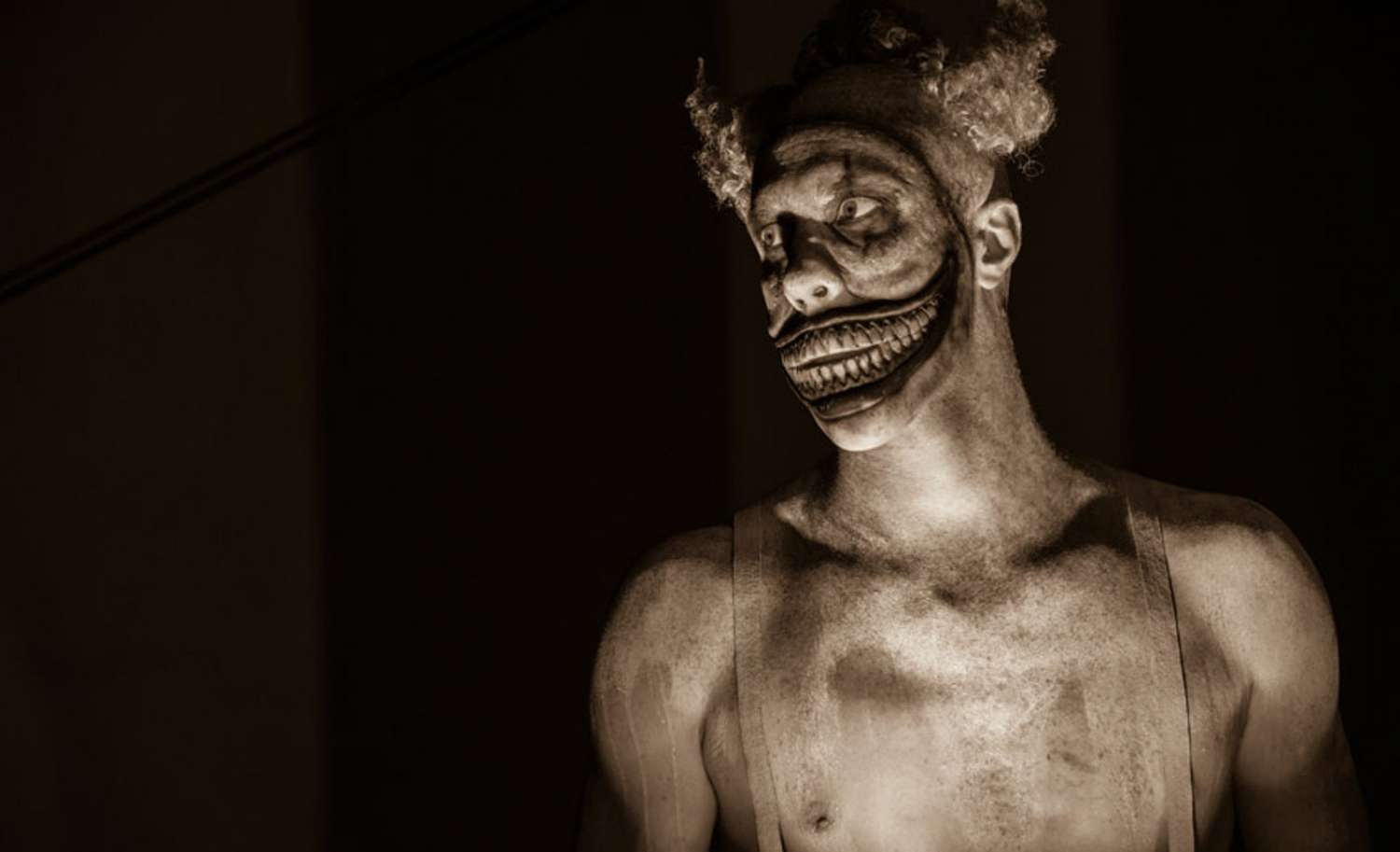
Promotional image for movie “HIM”. Photo Credit: Universal Studios
“Him” details the blurry spiral of stardom through instances of brain injury, drugs and the ubiquitous desire to become something greater than the skill you possess.
The Jordan Peele-produced “horror” flick narrates the story of Cameron Cade, an athletic sparkplug whose path to historical embroidery is altered when he accepts a training camp invitation from a believed football savior—only to be frighteningly placed between his dreams and humanity.
The film is seemingly about God, or at least what it takes to become one. If this striking revelation was not apparent within the first three minutes of the film, forced religious imagery and constant reminders about the movie’s theme will eventually lead you down its narrative potholes.
Although the film started as a promising dive into the sport fanatic underworld, it quickly became apparent that the movie’s chances at competence were slim.
A football drill scene in the feature’s first act was possibly the only time that the visual effects were not blatantly overused. The visual effects showcased an X-ray in a way that breeds emotional height, rather than letting it fizzle out.
Marlon Wayans‘ performance as the crazed super-athlete, Isaiah White, was also a glowing lantern in an otherwise unremarkable film. He nearly matches the unpredictable intensity of character Hans Landa in war film “Inglourious Basterds”– without a very strong script to assist him.
After viewing the movie, I believe the film was an altogether messy patchwork. It was a stitched-together Frankenstein’s monster of a movie.
The movie’s pacing was lost through collages of quick events in succession, one of which is perhaps the movie’s most shocking plot twist. Yet, this ground-breaking twist held virtually no weight in context with the film.
Though riddled with jokes ripped straight from TikTok’s For You Page (the phrase “Him-othy Chalamet” was genuinely uttered by one of the characters), the most comedic moment of the film came almost inadvertently.
To depict Cade slowly coming into his role as football’s future messiah, Leonardo Da Vinci’s painting, “The Last Supper,” was recreated. Cade depicted Jesus in the famous painting, and eager reporters sat around the press table to replace the roles of the original disciples.
The scene was placed in an extremely awkward point among the film’s momentum, adding to its inconsistency.
In hindsight, this seemingly unimportant scene serves to epitomize the main problem with the entirety of the movie: an incoherence in logic covered up with glossy, surface-level symbolism.