
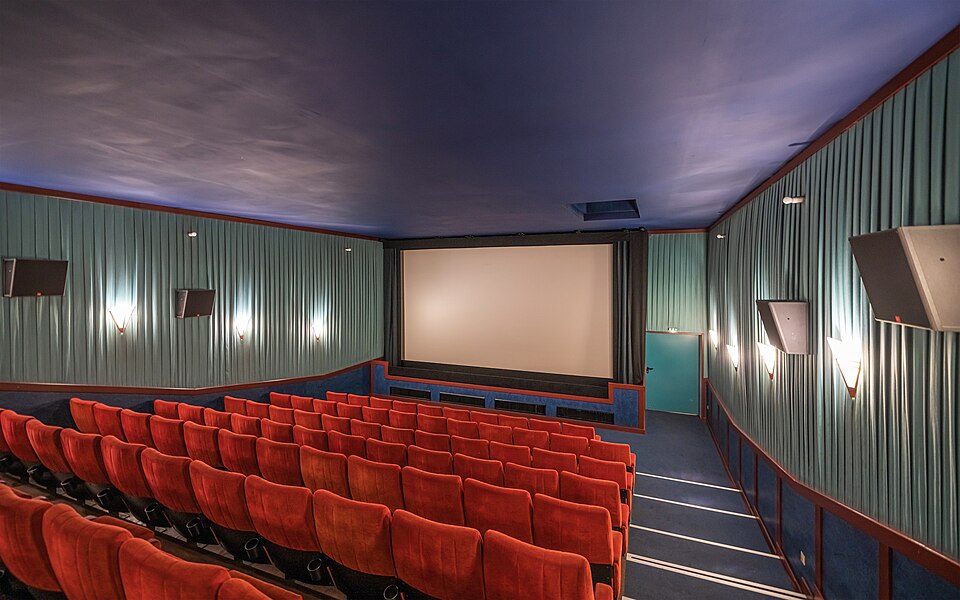
An old movie theater. Photo credit: Public domain/Wikimedia Commons.
For decades, horror movies have found a multitude of ways to keep audiences looking over their shoulders, from masked killers hiding in foggy clouds of darkness to a supernatural presence lingering in an unsuspecting family’s home.
However, the horror genre has undergone more transformations than you may think.
Films likePsycho (1960), The Exorcist (1973) and The Evil Dead (1981) became major influences on the horror genre by creating fear without relying on elaborate computer-generated imagery, known as CGI. Instead, filmmakers used lighting, camera angles, music and practical effects to build the tension.
However, with advancements in filmmaking technology, modern horror has taken a different approach, with directors now having access to CGI.
Relying on more realistic special effects and advanced sound design, movies such as The Conjuring (2013), Hereditary (2018) and Smile (2022) showcase new technology while still putting scares and unsettling experiences first.
Modern horror has also expanded its storytelling, with many films diving into deeper themes such as mental health, grief and family trauma instead of focusing solely on surface-level monsters and masked killers. According to researchers Becky Millar and Jonny Lee, horror films can effectively portray complex emotions through their characters and storytelling, giving the audience something to relate to.
Mental health was heavily stigmatizedup until early 2010s, but horror filmmakers always incorporated psychological horror into their storylines. More recently, psychological horror has emerged as a prominent and more individual genre, and directors have created effective scares without the use of additional paranoia elements.
Fear is also presented differently to audiences.
Classic horror films took their time with building suspense, allowing their viewers to anticipate a horrifying moment before it happened. Modern horror, however, frequently combines sudden scares and intense visual effects, and they are more willing to show what is behind the shadows.
Despite the differences, modern filmmakers are beginning to revisit the techniques and styles that made older horror movies so successful and lovable.
Ti West’s X (2022), for example, takes heavy inspiration from early 1970s slasher films, including Psycho. Most recently, Never After Dark (2026) takes inspiration from early 2000s Japanese horror films, such as Ju-On: The Grudge (2002) and Ringu(1998), focusing on slow-building tension with restless spirits and eerie and jerky mechanics.
Filmmakers continue to find ways to combine traditional horror elements with modern storytelling, introducing familiar styles and screams to a new generation of audience members.
Although technology in the movie industry continues to advance, the appeal of horror remains largely the same. Audiences still enjoy the suspense, unexpected twists and turns and the adrenaline that comes with watching.
No matter if the future of horror lies in more technological advancements or a return to its roots, filmmakers are far from running out of ideas to scare us.

