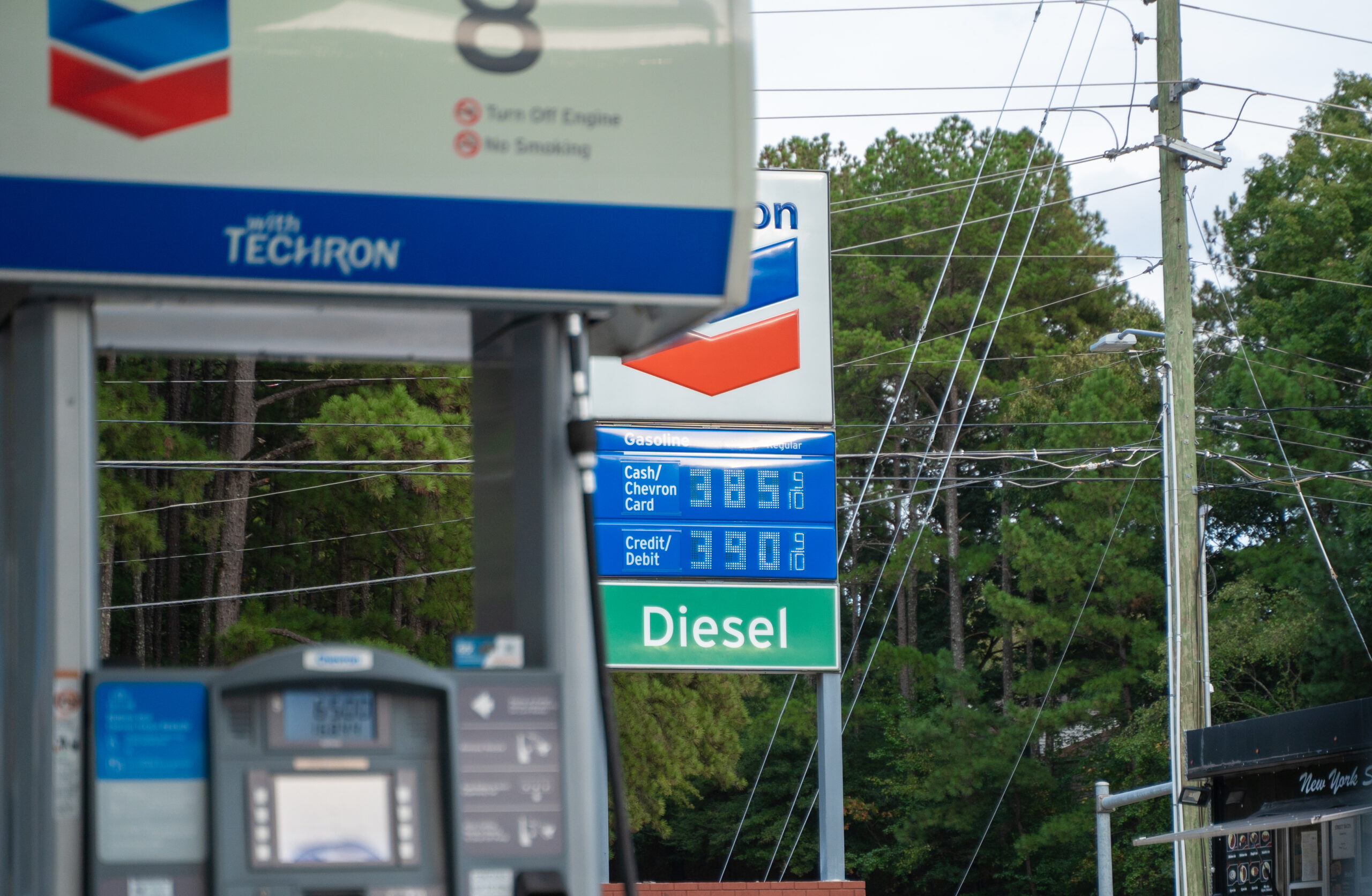
Georgia’s gas tax suspension cuts about 33 cents off each gallon, but some KSU students question whether 30 days of relief will be enough.
Some KSU students say Georgia’s gas tax suspension, which cuts about 33 cents off each gallon, should be extended past its Oct. 29 expiration.
Gov. Brian Kemp suspended the tax by executive order on Sept. 29. Gas prices have increased about $1.41 a gallon, or 47.4%, since the U.S. and Israel began striking Iran on Feb. 28, according to an estimate from Brown University’s Watson Institute for International and Public Affairs.
The tax normally pays for roads and transportation, and pausing it costs the state about $200 million a month.
Patrick Gaw, a senior media and entertainment major, drives a truck between work and school and said gas prices “absolutely wreck me.”
Gaw said he spends about $400 a month on fuel. When prices hit $4.58, he calculated he was spending 44 cents per mile, while his job reimburses only 40 cents per mile.
“So driving for work, I was actually losing money,” he said. “Any difference helps me.”
Jake Izzo, a second-year public administration master’s student, lives within walking distance of the Kennesaw campus but drives a lot for work.
“There’s a pretty big difference, especially if you’re a commuter student paying almost $4.30 for gas every time you have to fill up,” Izzo said. “You’re already paying so much for tuition and school.”
Izzo was hesitant to say how long the suspension should last, saying it depends on what happens with the war in Iran. Ultimately, he leaned toward extending it.
“It should last longer, to be honest with you,” he said.
Gavin Bedell, a junior economics major, took a stronger stance. He said the suspension should be prolonged “at least for a few more months” until prices return to normal.
“People can’t afford to fill up their tanks every single week at those prices,” Bedell said. “So it’s really just a question of who is the burden falling on. Is it the taxpayers as a whole or is it individual residents?”
Bedell suggested raising income taxes on top earners to pay for a longer suspension.
“If we were to increase some income taxes for those at the top, we could comfortably extend those for however long we need to make sure that people are able to [afford] these prices,” he said.
For Gaw, the question of whether the suspension should be extended depends on the price at the pump.
“If gas prices across the board start going down, then I don’t think the suspension is needed,” he said. “If gas prices maintain the same rate or go higher, then yes, I would think they should extend it.”