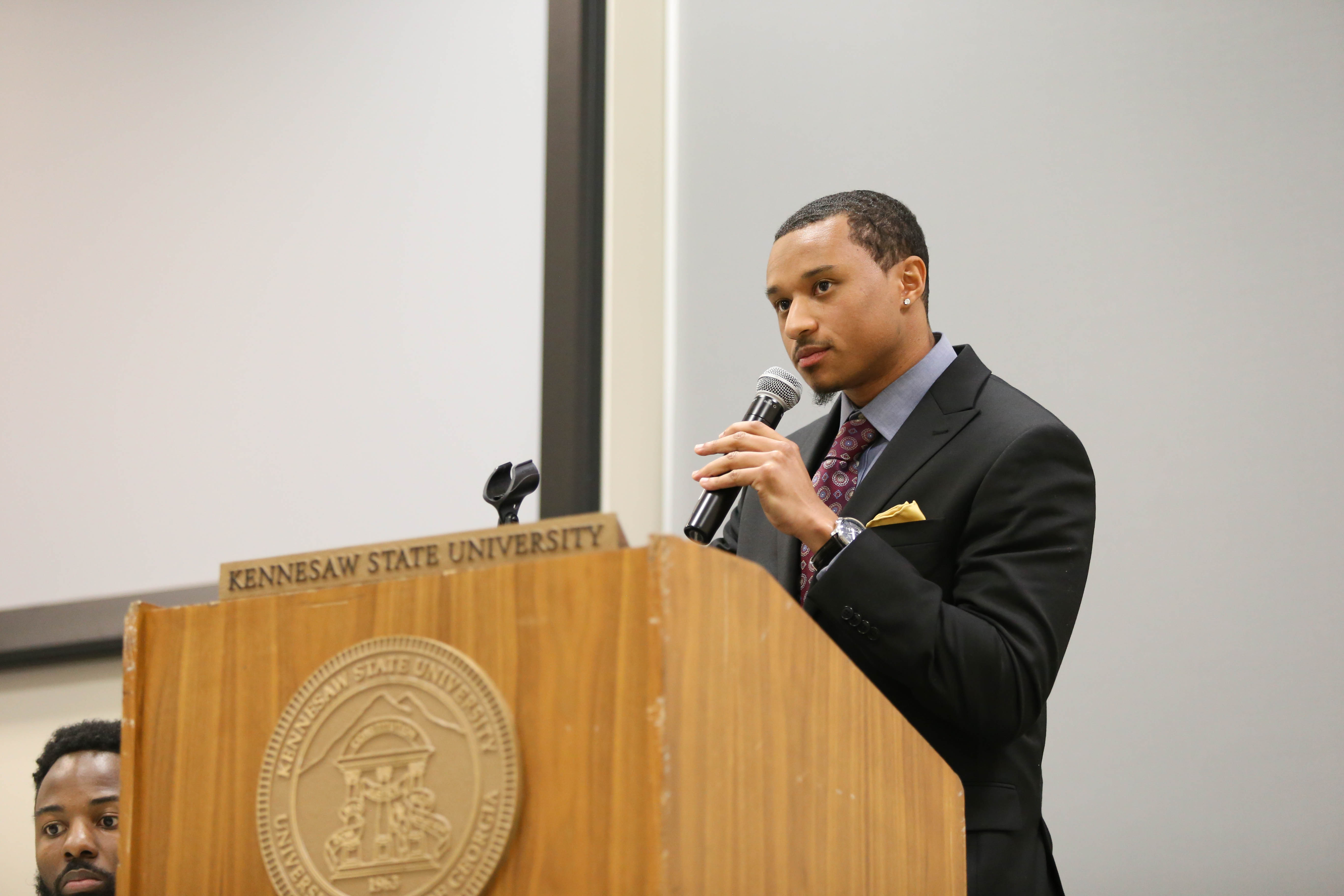
Atlanta Journal Constitution chief political reporter Greg Bluestein urged Kennesaw State University students to look beyond national political headlines and focus on how politics affects their own campus and community during a visit on Oct. 7.
Bluestein, who also hosts the AJC’s Politically Georgia podcast, spoke with KSU students as part of the University’s Georgia Politics Speaker Series.
The series brings political professionals to campus to discuss their careers, experiences and perspectives with students.
Much of Bluestein’s presentation focused on the evolution of Georgia politics and the 2026 election, but his advice to student journalists centered on a more local question: What does national and state politics mean for the people around you?
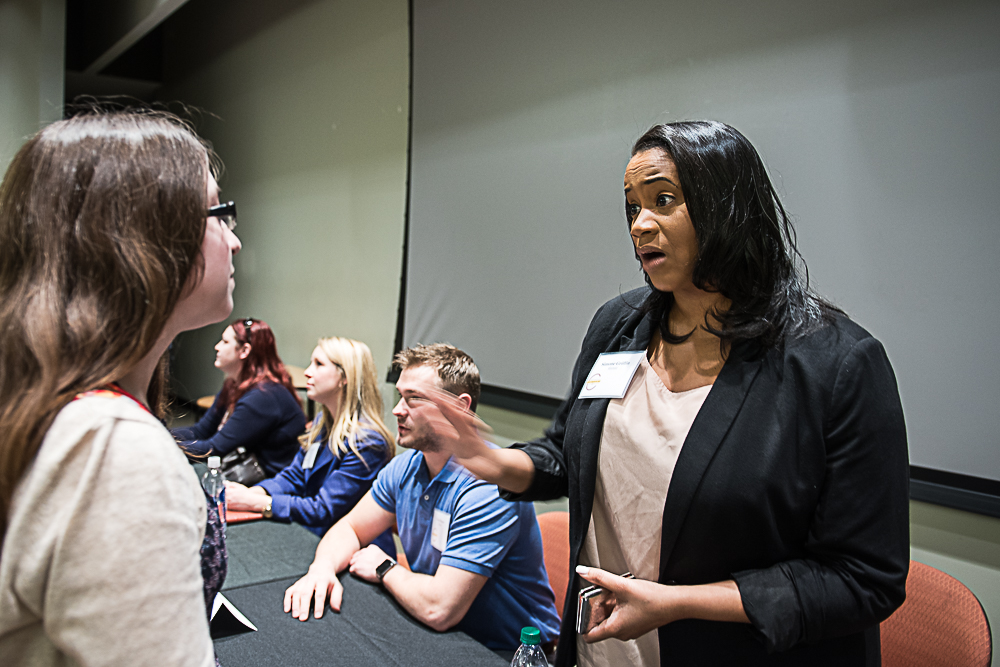
During a question-and-answer session, Bluestein was asked about difficulties student journalists face when covering politics, including backlash and access to political figures.
Bluestein said one of the most important lessons he learned as a student journalist at the University of Georgia was to understand his audience.
He recalled covering the aftermath of the Sept. 11 attacks for UGA’s student newspaper, The Red & Black. Looking back, Bluestein said he focused too heavily on the international story instead of reporting on how the attacks were changing life on his own campus.
“I should have been writing about those stories,” Bluestein said.
He encouraged KSU journalists to avoid limiting themselves to the stories receiving the most national attention.
“You have to know the audience,” Bluestein said.
Bluestein explained that does not mean student journalists should avoid major political stories. Instead, they should consider how those stories affect their own communities.
“You can still cover huge stories, presidential stories, national stories,” he said. “But use the experiences of your audience.”
For KSU students, that could mean examining how state and federal decisions affect higher education, tuition, university funding and students’ daily lives.
Bluestein also encouraged students interested in politics and journalism to gain experience outside the classroom.
“Whenever you are doing journalism, politics, anything else, go do it,” he said.
The advice came as Bluestein reflected on his own time at UGA, where he said working for The Red & Black taught him how to hold public officials accountable while also learning how to respond when his reporting was challenged.
He said criticism is an unavoidable part of political journalism.
“It happens to all of us,” Bluestein said. “It’s sort of part of the territory.”
Bluestein also discussed the changing role of journalists as artificial intelligence becomes increasingly capable of producing basic news stories.
He said journalists will need to distinguish their work through reporting, context and analysis rather than simply repeating what happened.
For students entering journalism, he said the challenge will be answering questions such as why a political decision was made, what it means for an election and how it affects a particular community.
That local focus was also reflected in Bluestein’s discussion of Georgia’s 2026 political landscape.
He said issues such as affordability and the economy are likely to play a major role in the election, while the state’s status as a political battleground continues to attract national attention.
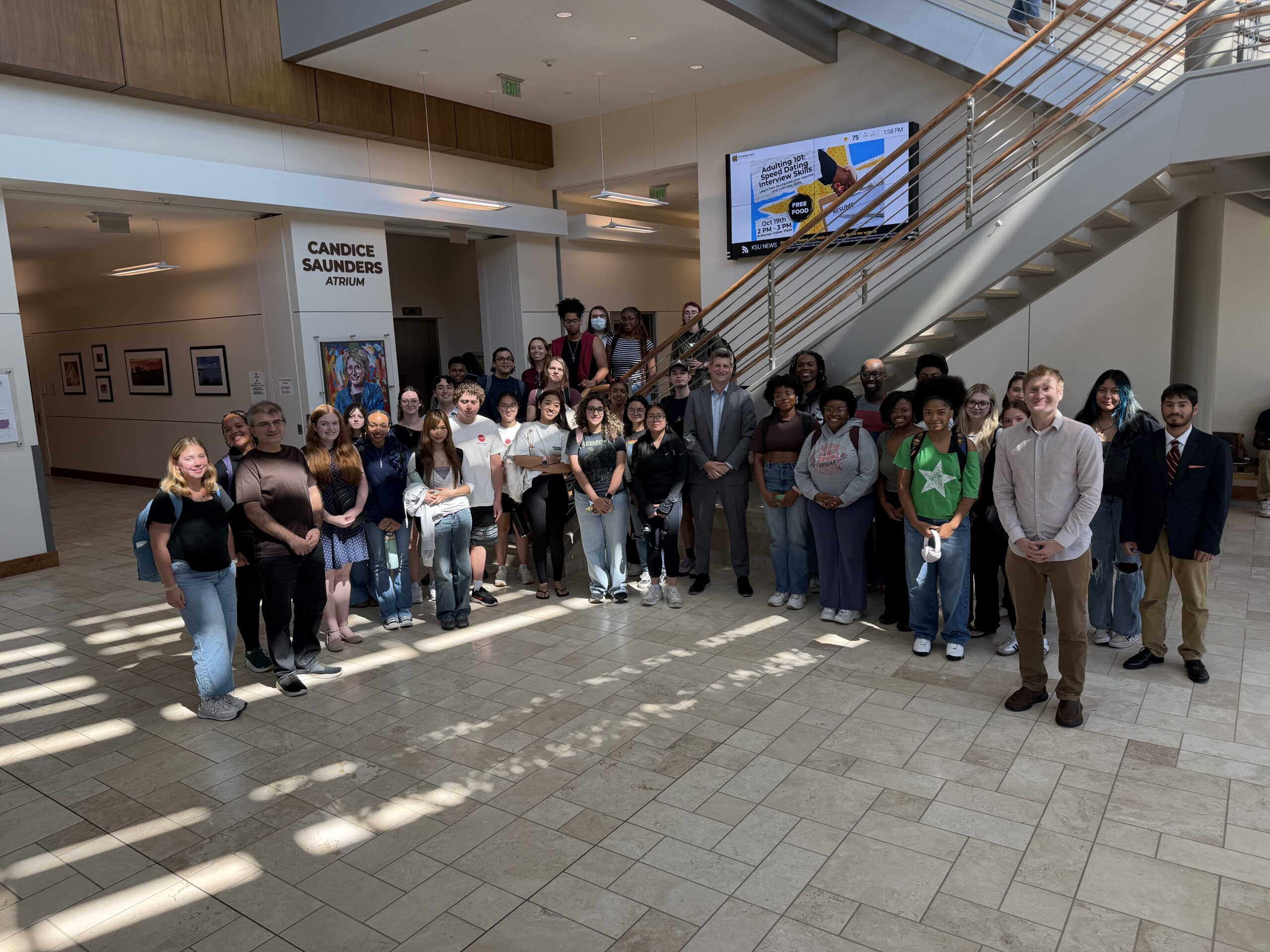
But for the students sitting in the KSU audience, Bluestein’s message was less about following the national political conversation and more about finding where that conversation intersects with their own community.