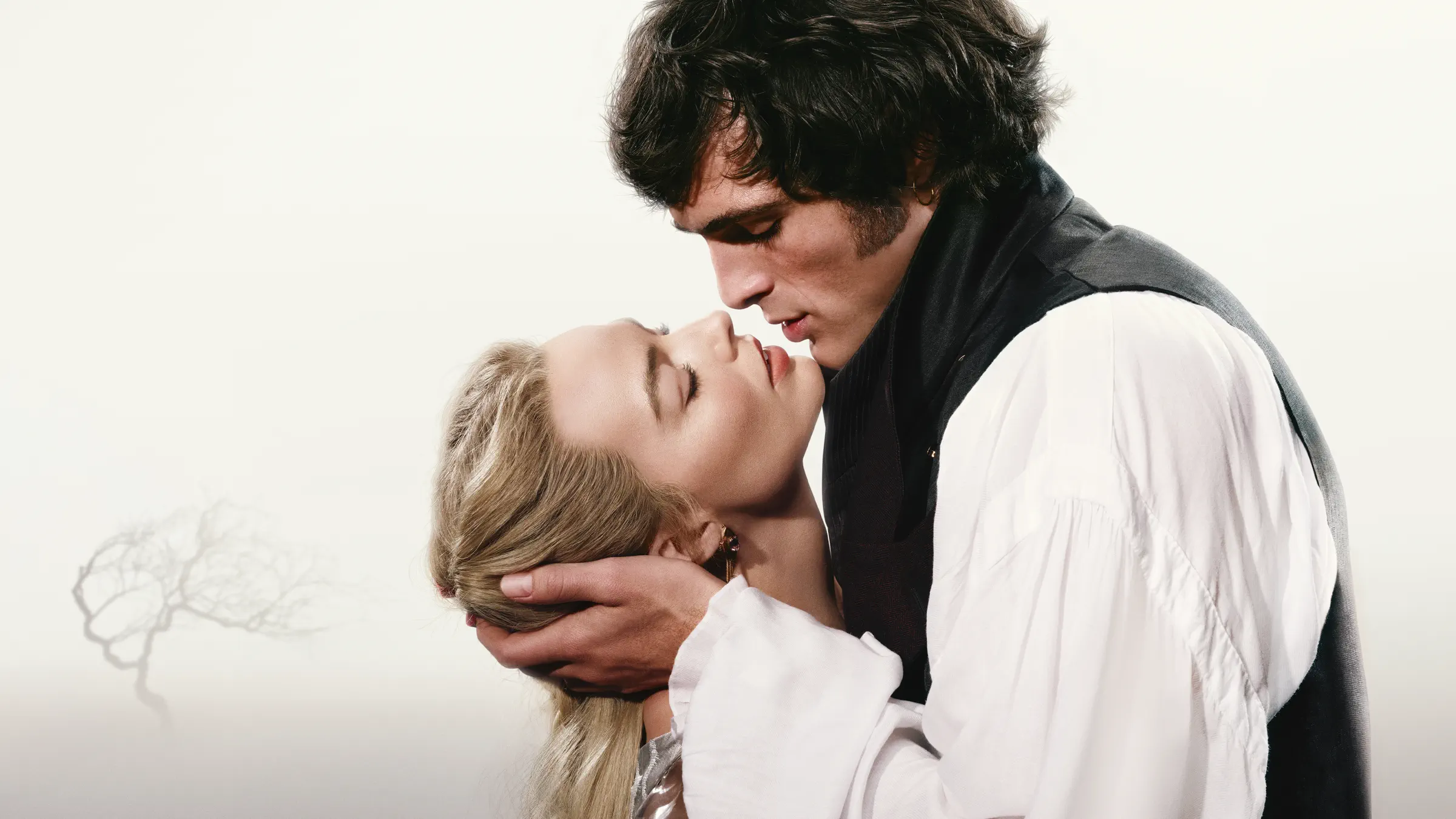
Wuthering Heights cover, Uploaded by Apple TV. February 2026
Emerald Fennel’s Wuthering Heights adaptation underwhelms viewers and critics with its blatant whitewashing and other controversial elements.
There have been several book-to-film adaptations in the last year that have garnered loyal followings: “Frankenstein,” “Wicked” and “Nosferatu” to name a few.
Their director’s passions shone through their stunning visuals, compelling characters and reimagined aspects of these classics, while also allowing the texts to be adapted for modern audiences.
Unfortunately, Emerald Fennel’s recent “Wuthering Heights” could not be further from the previously mentioned films. This movie has sparked outrage from fans of Emily Brontë’s magnum opus, creating an abundance of discourse surrounding its release.
Arguably, the biggest controversy surrounding this film’s release is the choice to cast Australian actor Jacob Elordi as Heathcliff, a canonically nonwhite character.
For those unfamiliar with the original novel “Wuthering Heights,” Heathcliff is of a different race and class than the majority of the white elites in the novel.
His ambiguous ethnicity is of great importance to the themes of the story, especially after Heathcliff acquires wealth and is still ostracized by society because of his skin tone.
Through this whitewashed and shallow portrayal, it is clear that Emerald Fennel’s interpretation was not intended to be a commentary on class, race or gender.
Instead, it is watered down to a generic love story with vapid and unlikable characters.
Fennel’s casting of Jacob Elordi neglects the depth of the source material and creates an “all surface no substance” film.
The whitewashing of Heathcliff isn’t the only controversial aspect of this film’s release, as Australian actress Margot Robbie, who plays Cathy Earnshaw, wore the Taj Mahal diamond at the film’s red-carpet premiere.
The Taj Mahal diamond was one of the many treasures pillaged from India by the British Empire. This diamond was a gift for Mughal emperor Jahangir’s wife, Nur Jahan. Since its theft, it was bought by actor Richard Burton and gifted to Elizabeth Taylor as a necklace.
This blatant ignorance only affirms the truth that Emerald Fennel’s star-studded cast and portrayal of the story center whiteness.
Fennel’s movie adaptation denies any discussion pertaining to racial exclusion, the class divide and systemic oppression, all of which are themes of the original “Wuthering Heights.”
Per usual, the British filmmaker has little to say and too much to show. Admittedly, the visuals in the film are impressive, but the movie itself has zero takeaways, character arcs or compelling plots.
It’s painfully delusional and wholly irresponsible of film directors and creatives alike to ignore the messages woven into the classic literary canon, thus the overwhelming outrage at this inauthentic attempt to honor a revolutionary story.
There are also arguments to be made about how white feminism permits white women to subvert investigations into racial discrimination and intersectionality.
Make no mistake, Emerald Fennel’s hollow, oversexualized adaptation, Jacob Elordi’s unapologetic misrepresentation and Margot Robbie’s delusional justifications are permissible because of their whiteness.
Needless to say, this adaptation will go down in disappointing, mediocre infamy.