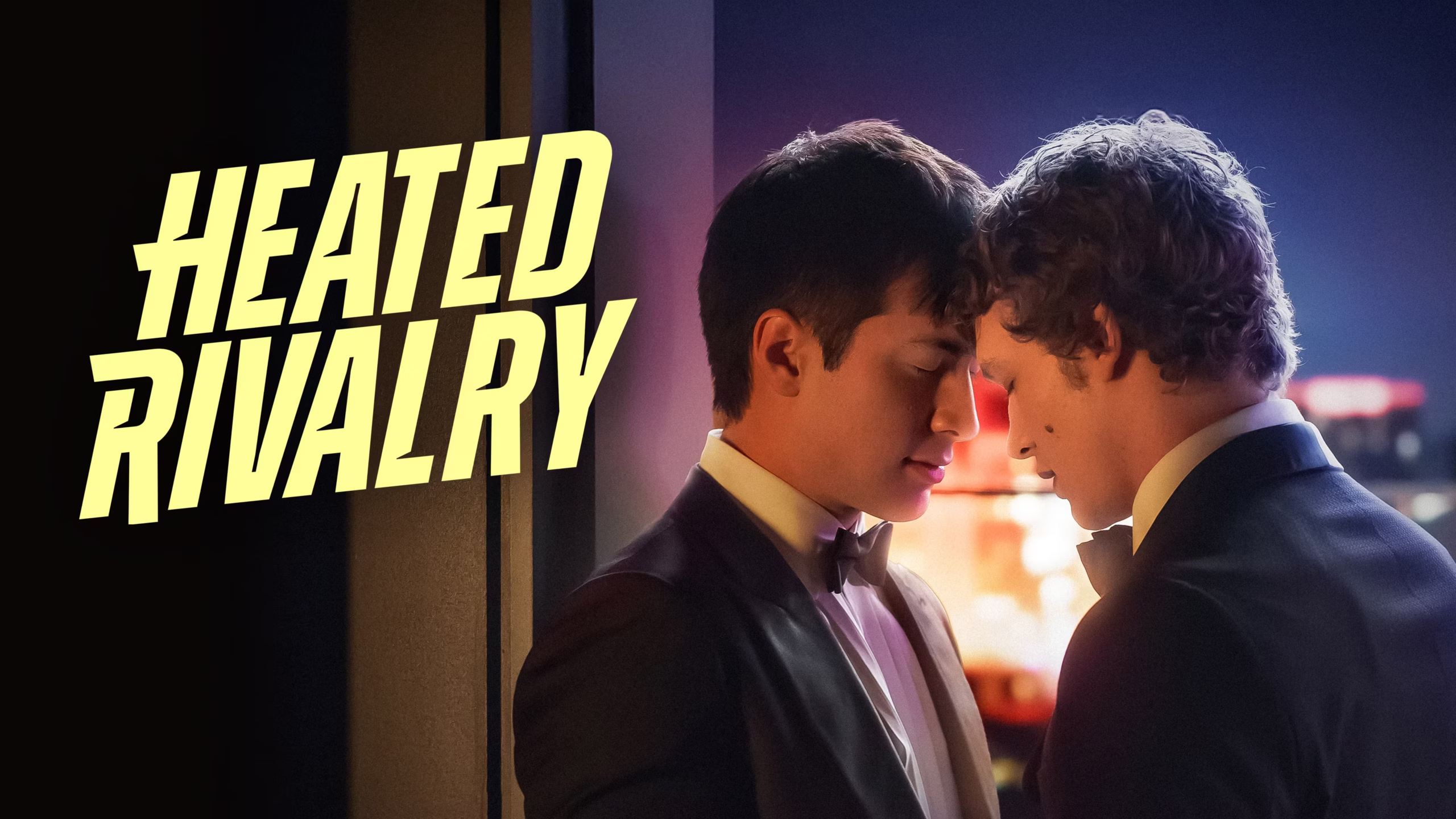
Photo Credit: HBO Max
In the heat of the new hit show “Heated Rivalry,” many viewers wonder why shows featuring men-loving-men (MLM) are vastly more popular than those with women-loving-women (WLW).
“Heated Rivalry” by Jacob Tierney follows the secret romance of two rival men’s hockey players, and it is currently topping charts in its third month of release.
Fans are going wild over the show online, and producers are taking advantage of it. The leading actors, Hudson Williams and Connor Storrie, are being marketed extensively to continue the show’s traction, creating more viral moments through exclusive interviews and awards presentations.
This isn’t the first MLM show to go viral, though.
In 2021 and 2022, the shows “Young Royals” and “Heartstopper” skyrocketed in popularity and critical acclaim, earning awards and additional seasons shortly after their releases. They received an abundance of marketing from producers that ranged from advertisements to behind-the-scenes teasers.
On the other hand, WLW shows like “A League of Their Own” and “Willow” were cancelled early and not marketed properly by producers, leading to a lack of support for shows featuring sapphic relationships.
Industry professionals are now afraid of the risk these shows pose and limit the sapphic stories they’re willing to produce, instead opting for the guarantee that MLM shows provide.
Although some argue that the issue lies in the small audience for sapphic shows, the statistics prove otherwise.
“First Kill,” a teen drama following the relationship between a monster hunter and vampire, peaked at the Top 3 of Netflix within the first month of its release in June 2022.
Much like “Heated Rivalry,” it was based off an enemies-to-lovers story by a bestselling author, and it gained widespread popularity quickly.
Still, it was cancelled after the first season.
It is clear that the problem isn’t about audience and is instead based in misogyny.
In a male-centered, patriarchal society, WLW relationships are inherently deviant in the way they separate from men entirely. The often male-driven film industry thus sees WLW relationships as less real, less important, and less sellable.
Sapphic stories are given less effort and marketing, creating a system that affirms the producers’ idea that WLW shows are too risky and niche to be successful. With that mindset, no sapphic show will be given the same opportunity as “Heated Rivalry.”
Representation is important for all members of the LGBTQ+ community, not just those that mainstream media views as “sellable” and “palatable.” While sapphic audiences may be able to relate to MLM stories, they are just as deserving of shows that portray experiences that are unique to them.
Currently, the industry is not giving WLW shows a chance. However, if there is a greater push for sapphic shows with better marketing and multiple seasons, they can gain traction to meet MLM shows in popularity.
“Heated Rivalry” is not the issue; it is industry professionals using misogyny to excuse the exclusion of sapphic stories from television.