
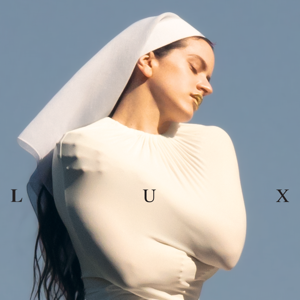
Photo Credit: rosalia.com. Rosalía’s new album “LUX”, released Nov. 7, 2025.
Rosalía released her fourth studio album “LUX” on Nov. 7 to critical acclaim, with fans hailing it as an avant-garde masterpiece.
Only three days after its release, “LUX” landed a spot as the No. 1 rated album of 2025 on Metacritic with a score of 97. The bold album serves as an in-depth look into Rosalía’s religious experience, her relationship with ex-fiancé and fellow musician Rauw Alejandro as well as a return to her roots in flamenco.
Over the course of the album, Rosalía sings in 13 different languages, including Catalan, French, Italian, Latin and Japanese. This added to the experimental nature of the album and aimed to break down language barriers to include everyone.
“LUX” opens with “Sexo, Violencio, y Llantas,” showcasing the central conflict and overarching theme of the album: the earthly vs. the divine.
The first and only single, “Berghain,” features musical artists Björk and Yves Tumor with instrumentals from the London Symphony Orchestra. It gave an edgy and abrupt introduction to the album, presenting heavy strings and a German choir. Compared to the rest of the album, it creates a tonal shift from light and airy to dark and edgy.
“La Perla” is a directed to Alejandro, who had previously released music targeted toward Rosalía and their breakup. In the lyrics she calls him “The local disappointment, national heartbreaker/ An emotional terrorist, the greatest disaster in the world.”
Rosalía and Alejandro’s breakup was a popular piece of gossip in 2023, and it seemed amicable by all accounts. However, “La Perla” and “Dios es un Stalker” tell a different story, showing the pain Rosalía felt throughout their relationship and addressing Alejandro’s alleged infidelity.
“De Madrugá” marks a return to Rosalías roots in flamenco. The song was originally meant for her debut album “Los Ángeles,” which leans into her Catalan heritage and past as a flamenco singer. “De Madrugá” features prominent palmas, a style of clapping used in flamenco music, and an intoxicating baseline.
The closing track “Magnolias” depicts an image of the singer’s funeral. She describes how she wants the guests to celebrate her life and carry on her legacy. In the chorus, the singer repeats the words “Throw me magnolias,” a flower that symbolizes dignity and purity.
A theme found throughout Rosalía’s work is transformation. Her Grammy award-winning album, “El Mal Querer,” is a concept album featuring experimental production with sounds like screeching tires and revving engines. Her third album, “Motomami,” is heavily influenced by reggaeton and Latin sounds, also demonstrating experimental production.
The singer’s new album continues this trend by completely shifting what fans know and love about Rosalía and transforming it into an operatic pop symphony. By fusing classical elements like strings and orchestras with pop melodies, she aimed to create a truly unique listening experience.
Rosalía’s constant shift in sound can lead to confusion surrounding the genre of her music. In an interview with the New York Times’ “Popcast,” she brought up whether or not her music should be considered pop.
“I want to think that my music is pop,” Rosalía said. “There has to exist other ways of making pop music, and I have to think what I am doing is pop because, otherwise, I don’t think that I am succeeding.”
“LUX” displays Rosalía’s vast musical knowledge and transcends both language barriers and genre limitations to create an album that anyone can enjoy. The blend of different musical styles, melodies and languages shows that pop music can be more than what is dominating the charts.