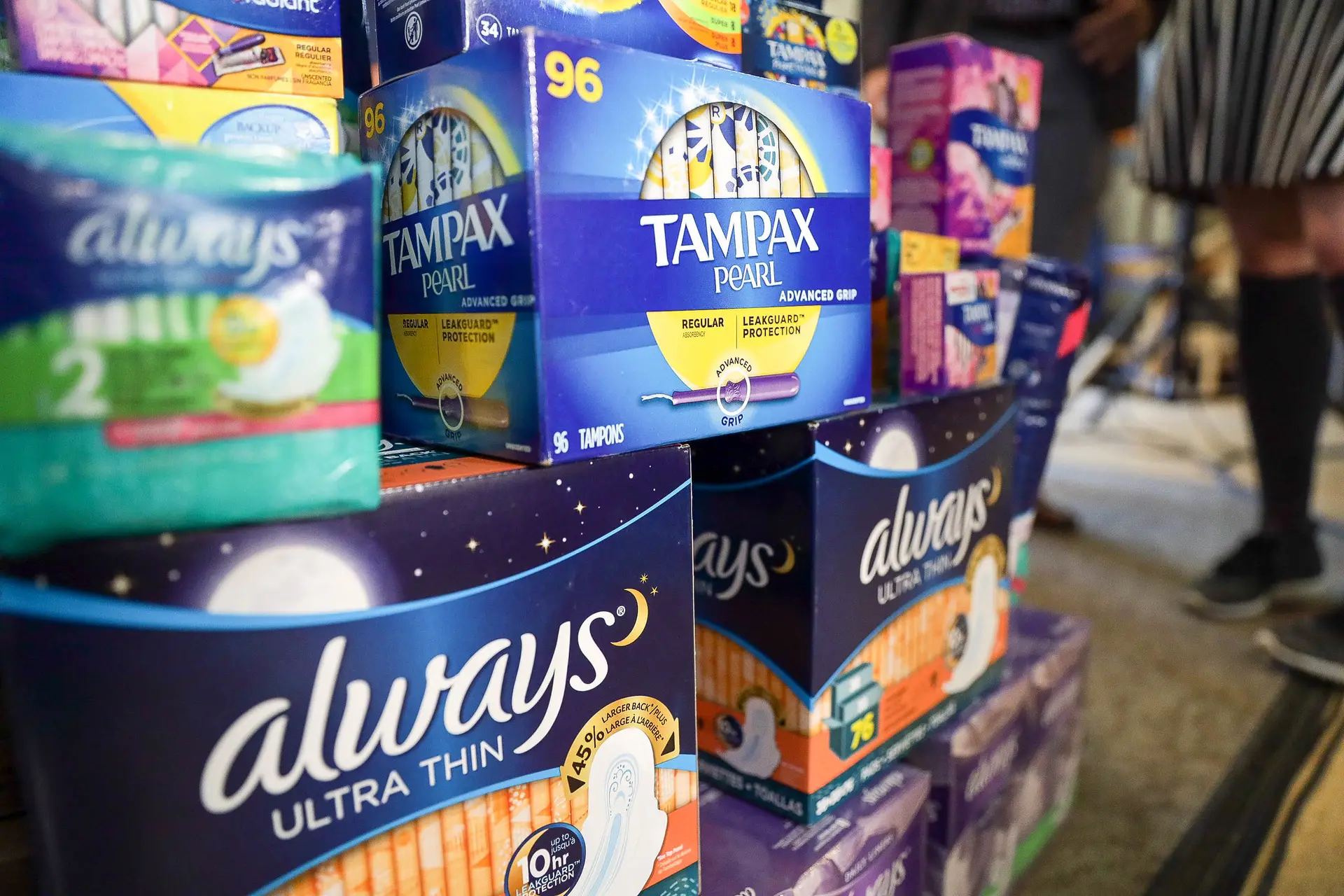
Stacks of donated menstrual products. October 7th, 2022. Photo Credit: British Columbia Photos on Flickr
The conversation about tampons and pads used to be just about comfort and absorbency. Now, it’s about hidden chemicals and recalled products, and frankly, it’s a wake-up call that intimate products aren’t being treated with the safety scrutiny they deserve.
While Toxic Shock Syndrome (TSS) remains a risk, the latest concerns hit much closer to home and involve a wider range of products. It’s not minor issues; it’s substances like “forever chemicals” and heavy metals, including lead and arsenic, being detected in popular tampons and pads.
A 2024 study that found measurable amounts of metals in tampons has directly triggered an FDA investigation. It means scientists and lawmakers are finally acknowledging that the cotton and materials used might be contaminated, and the vaginal tissue is highly absorbent, meaning these toxins have a potential direct path into the body.
Recent lawsuits have been filed over the discovery of toxic “forever chemicals” in menstrual pads, with advocates arguing that this poses a risk to reproductive health.
While large-scale contamination recalls are rare, a Class 2 Device Recall for certain coated tampons without proper FDA clearance stands as a reminder that some items slip through the regulatory cracks.
This escalating scrutiny proves that the safety standards are simply too low. These products are classified as “medical devices” by the FDA, which means manufacturers don’t have to list all their ingredients unlike shampoo or other products.
The good news is that people are fighting back with their wallets. The market for safer alternatives is booming, driven by consumers demanding transparency.
Made from medical-grade silicone, reusable menstrual cups are widely regarded as one of the safest options, as they don’t contain fibers or synthetic materials commonly found in many disposable products. They also drastically reduce waste and save money in the long run.
For those who prefer disposables, 100% organic cotton tampons and pads are available as an option, as they are typically free from chlorine bleaching, dyes and pesticide residues commonly associated with conventional cotton.
Period underwear is a popular, comfortable choice, but consumers must be careful; some brands were also found to contain forever chemicals, proving the need to stick with companies that are fully transparent about their testing.
It’s unacceptable that products used by millions of people every month are treated like a secret, with companies not having to disclose what’s in them.
This isn’t just a regulatory failure; it’s a fundamental issue of health equity. The discovery of heavy metals and “forever chemicals” is a staggering example of how women’s health is often relegated to the back burner until lawsuits and scientific reports force a reluctant response.
Safety studies and ingredient transparency are integral to keeping menstrual products safe. This isn’t about scaring people; it’s about empowering people with the knowledge to make safe choices.
The FDA needs to require testing for all known contaminants, not just the original TSS concerns. People need products that are safe by design, not just assumed to be secure until a study proves otherwise.
Women’s health deserves to be a priority, not a profitable chemical experiment.