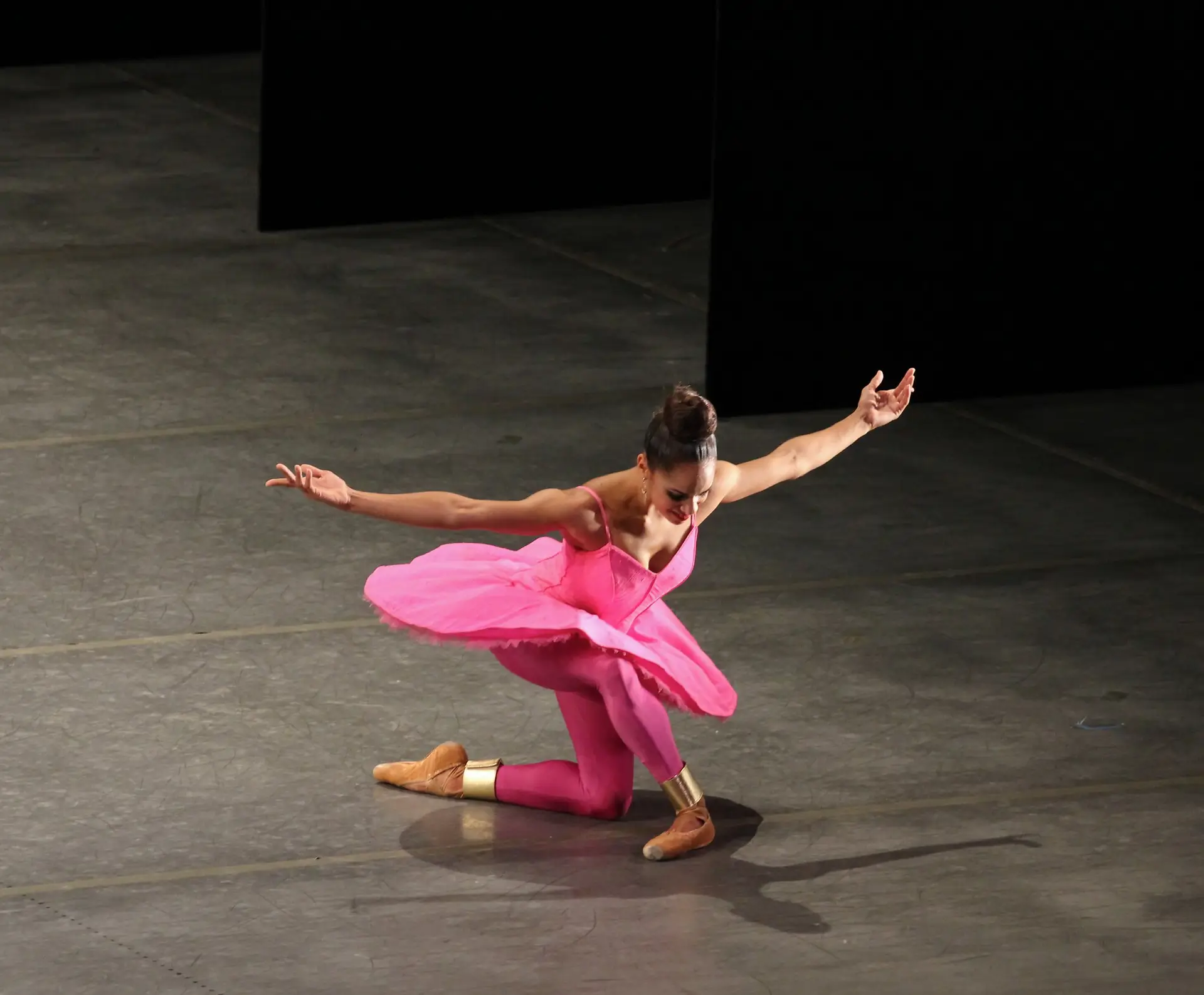
Misty Copeland performing at American Ballet Theatre. November 1st, 2013. Photo Credit: Kent G Becker/Flickr
Misty Copeland’s retirement from the ABT solidifies her place in the dance history books.
This past month, professional ballerina Misty Copeland took her final bows, signaling her retirement from the American Ballet Theatre (ABT)–the dance company where she became the first Black female principal dancer in its 75-year history.
Despite Misty Copeland hanging up her pointe shoes, her story and subsequent legacy carry beyond her exit from center stage.
When Copeland began her ballet journey, she was living in a motel room with her mother and five siblings, finding cramped space on the floor to sleep. When she attended her first ballet class at a community center, she was 13, an older age to start.
None of that mattered as she quickly adapted to the style of dance, starting pointe within her first three months–a major feat in the dance community.
Copeland’s humble beginnings and life-changing access to community resources prove the importance of investing in local programs.
This, however, was not the only challenge Copeland would have to overcome.
In her memoir, “Life in Motion: An Unlikely Ballerina,” Copeland detailed her struggles to fit in as one of the only Black girls in her ballet classes. This, in combination with the dance genre’s longstanding history of racial exclusion, created a tense atmosphere for Copeland to perform within.
Still, when she became the first Black female principal ballerina for the ABT, dance companies and prestigious theaters followed suit. They hired more Black dancers to perform in their productions and developing shows that discuss diversity and inclusion, thus proving the importance of representation.
Misty Copeland’s late start to ballet, combined with her diligent climb to the top, affirms the sentiment that anyone can dance if given the chance.
It isn’t shocking that accessibility in the arts is a significant concern for Copeland, as she has spent her career combating adversity inside and outside of the dance community.
Her life’s work, like the Misty Copeland Foundation, has ensured that more dancers have equal opportunities and education to pursue careers and passions like Copeland did.
Copeland has also attended several school gatherings to speak about accessibility in the arts. Her remarkable story is a testament to how crucial community outreach and programs can change lives for the better.
This impact has only encouraged Copeland to continue her advocacy for social movements and human rights after her retirement, as she believes dance is a form of activism, especially for marginalized dancers and troupes.
In her exit interview, Copeland says she is not retiring from dance altogether as she is not done creating and opening doors for more dancers, making this art form accessible and its community inclusive.
It is undeniable that Misty Copeland, a ballet prodigy, is also a trailblazer for ballerinas everywhere.
Her story reflects the reality of what it means to be a dancer: to find every opportunity possible to express oneself through movement and choreography, regardless of obstacles or naysayers.
Although it is unclear when the world’s stage will see her encore, the dance community will forever remember Misty Copeland as a ballet legend and a pioneer for Black ballerinas everywhere.