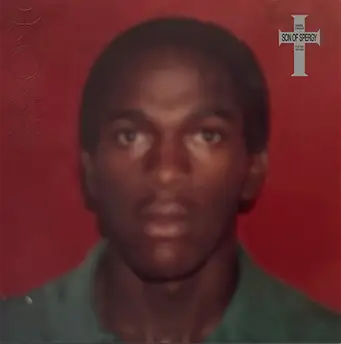
Photo Credit: Daniel Caesar. Daniel Ceasar’s “Son of Spergy” album cover. Released Oct. 24, 2025.
Daniel Caesar’s personal exploration into religion and relationship turmoil is captured through the alluringly gorgeous production on his newest album, “Son of Spergy.”
Daniel Caesar, or Ashton Simmonds, branched out further into gospel instrumentation with the help of legendary producer Jordan Evan. His neo-soul influence, present on previous projects such as “NEVER ENOUGH” and “Freudian,” was escalated on this new release.
Evan has been a close collaborator with many of music’s great soulful muses, such as Jay-Z, Drake, Eminem and John Legend. The release of Caesar’s fourth full-length studio album marks another collaboration between the two—a cooperation that has spanned since 2014.
Son of Spergy is seemingly titled in reference to Caesar himself. “Spergy,” in this case, is the nickname bestowed upon his father, Norwill Simmonds. Given the two’s history displayed by the lyricism in past Caesar releases, this collaboration is seemingly the sign of a reconciliation between him and his father.
Norwill Simmonds plays a larger role than just assisting in vocals for the album- his face is the cover of Caesar’s new project. His inclusion in the album’s cover art was purposeful, providing deeper understanding to the themes that the album consistently explores.
Religious themes are apparent throughout the first track, “Rain Down,” which is a testament to the project’s inclusion of elegant gospel elements. It operates as the taste-test interlude for the album, preparing listeners for a drastic tonal shift compared to his previous work.
The song “Baby Blue” displays Norwill Simmond’s excellent vocals, which propelled the quality of the project into classic status within the world of neo-soul.
Band Bon Iver‘s indie brillianceshines on the track “Moon.” The indie-folk band lends Caesar their signature style of melancholic guitar magic.
Caesar’s younger brother, Zachary Simmonds— under the pseudonym “646yf4t”—appears on the track “No More Loving (On Women I Don’t Love).” His dejected vocal style perfectly combines with Caesar’s more expressive voice.
Ending with an 8-minute signoff of a final track, Son of Spergy concludes as one of Caesar’s most developed and introspective projects to date.
The project’s contemplative nature may be attributed to Caesar’s renewed relationship with his fans. Before the album’s release, the singer hosted pop-up concerts in a number of cities around the U.S., including Houston, Los Angeles and Atlanta.
Each event was quickly met with conflict from the police, and they were shut down shortly after beginning. These events, despite the chaos that followed, established an element of fandom that Caesar holds close to his artistic aesthetic: the interconnectivity between him and his fans.
Pop culture journalist Ozioma Nwabuikwu highlighted Caesar’s association to himself and his fans during a interview with Toronto Star.
“‘Son of Spergy’ is less about global fame and more about internal alignment,” Nwabuikwu said. “The introspective new album, which chronicles Caesar’s journey from rebellion to embracing the full complexity of his identity, marks a profound act of maturity and self-acceptance.”
It seems as though Daniel Caesar was destined to create this project. It successfully displayed reconciliation with his roots and gave the audience a peak into the reasons why reconciliation was needed in the first place.
With “Son of Spergy,” the chapters of Daniel Caesar’s family trials and tribulations featured in his prior work seem to have finally closed.