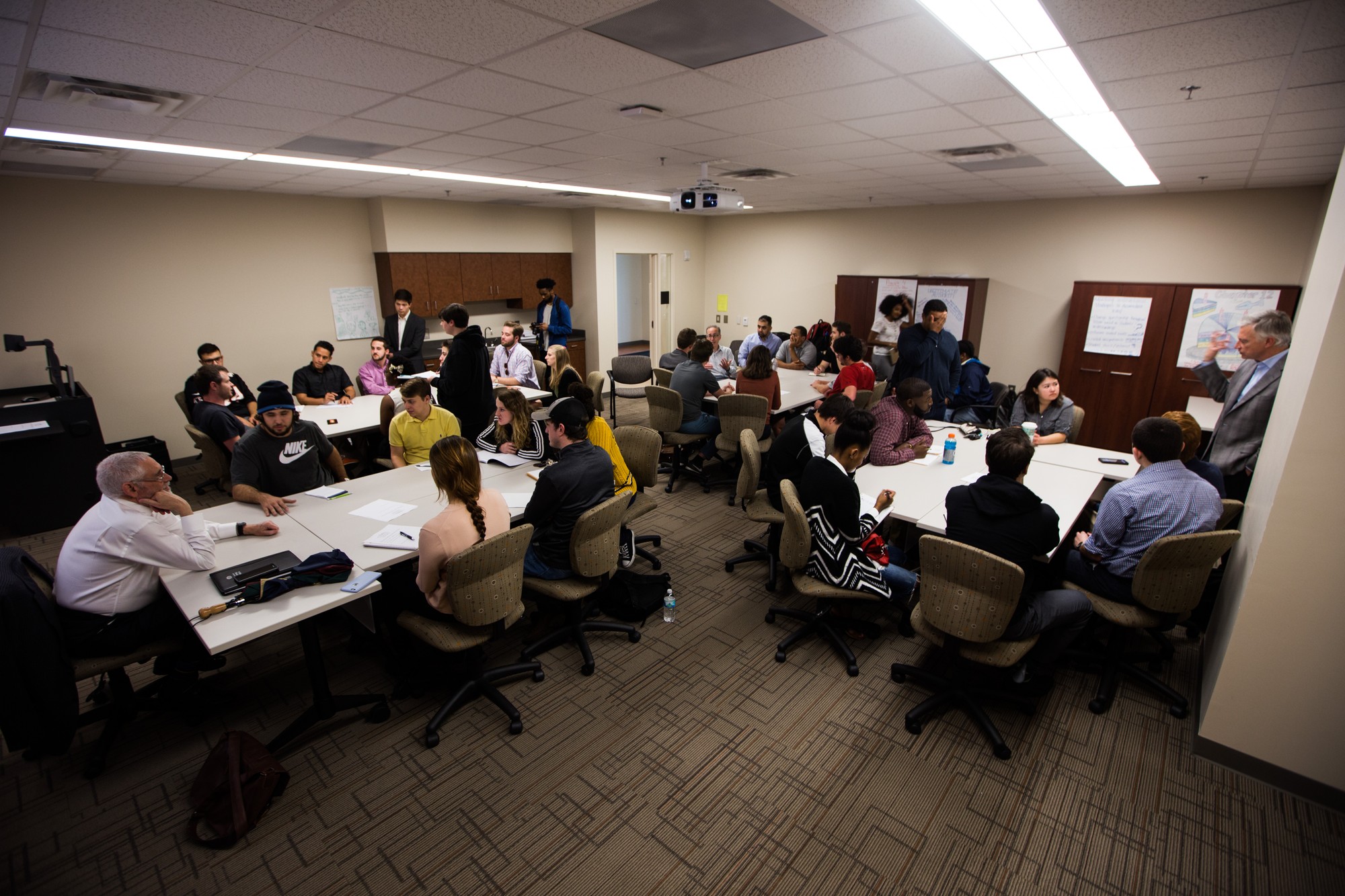
Concerned students and faculty joined together in a virtual press conference to discuss a petition calling for Kennesaw State to reinstate the black studies, philosophy and technical communications majors, as well as reverse changes made to campus resource centers. The conference was hosted by Nathaniel Oneill, one of the authors of the petition, as well as his co-author, Simran Mohanty, both KSU students.
Mohanty said that the university’s actions were indicative of an “institutional racism” that disregarded the interests of the 54% of KSU students who are of color, and framed resource centers as “third spaces” on campus, saying that changes to them threaten “[student’s] ability to exist as whole people on this campus.”
She vowed to archive and document “every name change, every erased program description, every broken promise” that the university was behind.
Dr. Lauren Thompson, Chair of the Department of History and Philosophy’s Curriculum Committee, as well as a voting member of KSU’s College Curriculum Committee, spoke on a resolution she helped draft as a part of the College Curriculum Committee.
The resolution, which Dr. Thompson said received support from much of the university’s faculty, condemned administration for eliminating the black studies, philosophy, and technical communications majors without any input from faculty.
Members of faculty, through curriculum committees historically have held a great amount of power when it comes to the deactivation of a major.
According to Dr. Thompson, citing an open records request, over the last decade, at least 20 different programs at the university have followed the outlined process for deactivation. In spite of this, administration claimed that they were within their rights to deactivate the majors.
“Shared governance is the heart of academic freedom at universities,” she said. “KSU…has a duty to uphold this shared governance process. If we do not, it is the entire project of higher education and the university that is at stake…”
Though these issues are currently shaping campus discourse, to many, the university has a history of attempting to weaken resources for minority students.
Dr. Cecille Accilien chaired the Department of Interdisciplinary studies, which housed the black studies program, from 2020, until she stepped down in 2022. Her resignation letter echoed sentiments similar to those felt by both students and faculty today.
She cited ambitions within the administration to target Critical Race Theory as well as Diversity, Equity, and Inclusion (DEI) programs as having held back her department and negatively impacted faculty morale. Additionally, she said that prior to her resignation, she was given unreasonable expectations about students within black studies, which “felt like a deliberate setup for failure.”
“It is my belief that the university was not committed to black studies then, and it is now using the current climate to do something that they have been trying to do for a long time: eliminate the black studies major,” she said.
Low enrollment has continued to be one of the university’s chief justifications for discontinuing the black studies major, but many have challenged this narrative.
Dr. Roxanne Donovan, a professor at KSU for over 17 years, said that the amount of students majoring in black studies has tripled since 2023, coinciding with a 39% growth in upper level black studies course enrollment and a 98% course fill rate, demonstrating a strong counter to administration’s claims surrounding the major.
A series of philosophy majors, two of them officers of KSU’s Philosophy Student Association (PSA), shared their unique insights about the damage removing the major could have on students and the university at large.
Henry Verrill quoted Georgia Governor Brian Kemp’s goal of making the state the “Number one place to do business,” saying that the elimination of the philosophy major would make that goal more difficult by leaving Georgia businesses with “fewer capable writers and critical thinkers.”
They also highlighted the potentially harmful precedent that KSU’s actions could have, saying, “Any program can be deactivated in the future if KSU isn’t prevented from unilaterally removing programs like [black studies, philosophy and technical communications] without the review required by their own processes.”
The PSA, according to Treasurer Koji Tada has become an “essential aspect of the KSU campus,” boasting high student involvement and participation, both from philosophy majors and those in other disciplines.
Despite the club’s success, administration cut its budget by 80% for the 2025-26 school year.
Tada highlighted the contradictory nature of KSU, which in 2023 put in place a program that successfully boosted philosophy enrollment, and is now intent on dismantling it.
Jacob Waller, the PSA’s president, shared similar ideas.
Responding to a question, Dr. Donovan made clear the value of communication between faculty and administration, saying, “I’m not here to demonize the higher ed leaders. They’re making difficult decisions, under high pressure circumstances, which is why…higher ed leaders have dialogue with faculty.”