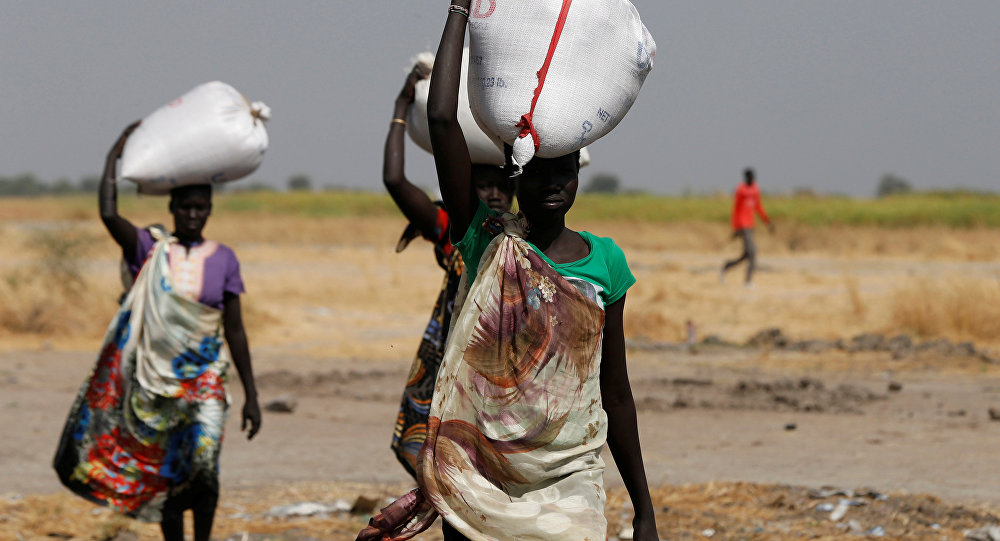
A group of women carry bags of food. February 2nd, 2020. Photo Credit: MoEbeid on Wikimedia
Over the years, the fight against famine has been perpetual. Although it is a predictable, preventable crime against human dignity, it is still an ongoing crisis in Sudan today.
The conflict between the Sudanese Armed Forces (SAF) and the Rapid Support Forces (RSF), ongoing since April 2023, has evolved into a nationwide protection and survival crisis.
As the conflict enters the new year, it remains one of the most rapidly deteriorating humanitarian emergencies in the world, demanding immediate attention.
As documented on social media platforms, children are bearing the burden of this crisis. U.N. agencies warn that hundreds of thousands of children face severe malnutrition, a life-threatening condition that becomes harder to reverse with every day that aid is delayed.
According to the World Food Programme (WFP), approximately21.2 million people are facing high levels of food insecurity, and hunger is expected to increase as food runs low.
Health services have been disrupted. Hospitals are overwhelmed or out of reach. Mothers, fathers and infants are dying of preventable causes.
Almost every year, the public is introduced to a growing number of immediate needs in Sudan. Yet, the world’s response to date has been inconsistent.
The U.N.’s integrated appeals for Sudan remain far from fully funded even as the number of people needing assistance has surged into the tens of millions.
Meanwhile, new rounds of fighting and attacks on infrastructure make humanitarian operations ever more perilous. The human cost will keep rising unless political and practical action follow.
First, unimpeded humanitarian access must be guaranteed. Aid agencies such as the World Food Programme (WFP) and UNICEF report that insecurity and logistical barriers are keeping life-saving food, nutrition and medical supplies from the hardest-hit regions, making it difficult to reach those in need.
Donors must close the massive funding gaps in the U.N. Sudan Humanitarian Response and Regional Refugee Response plans. Appeals totaling billions of dollars are far from fully funded, limiting food distribution, health interventions and protection services for refugees and host communities.
Additionally, neighboring countries need increased backing as they take in refugees fleeing starvation and violence.
Regional, and global powers should intensify diplomatic pressure on parties to end hostilities that fuel hunger. Together, these steps can save lives, protect refugees and stabilize the region.
Similarly, as we have learned about Sudan’s crisis over the years through the media, we can continue to share light on the situation.
Our platforms can be used to share vetted fundraising links. Even if individuals can’t donate, increasing reach helps organizations meet funding gaps. People can do their part to encourage followers to advocate for increased humanitarian funding and support for refugees.
The cost of inaction is measured in lives lost and futures erased. The world can prevent large scale famine in Sudan if it musters the political will to secure access, fund relief and support neighbors.
The people of Sudan need our help, and we should not fail them.