
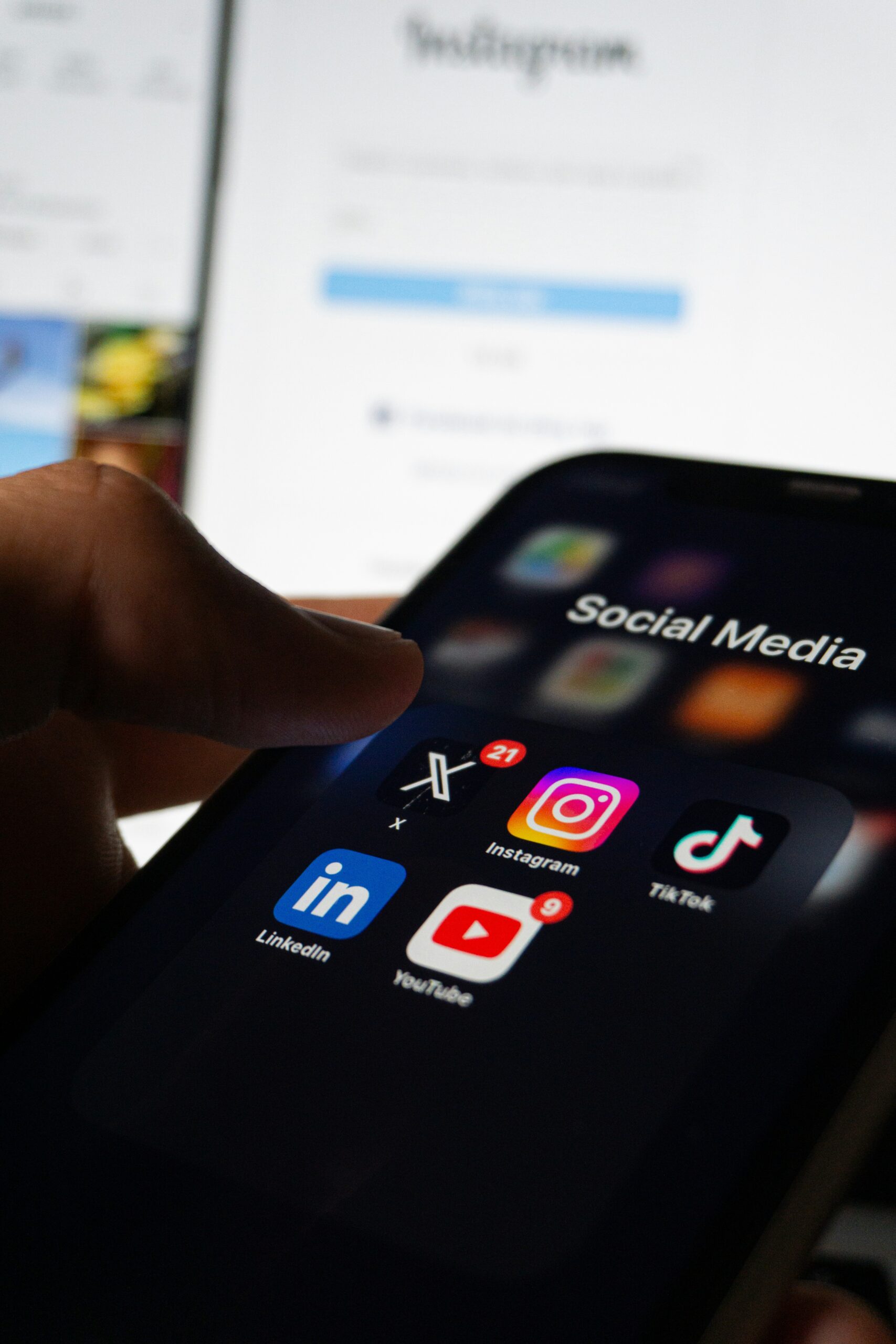
Social media apps on smart phone. August 28, 2024. Photo Credit: Berke Citak/Unsplash
The increased presence of Artificial Intelligence (AI) on social media platforms threatens media literacy.
Social media and its evolution have influenced and shaped the way societies function and connect, which has created major controversies in the past few years.
Recently, social media users and their feeds have been flooded with fabricated AI images and videos, and they cannot discern the difference between what is real and what is fake. This has led to the very real concern that society’s literacy crisis is accelerating.
There have also been instances of specific deepfakes of celebrities, politicians and other well-known figures, breaking down the ability to trust what is on the internet.
This issue is rapidly progressing as Large Language Models (LLMs) improve year by year, and within a short time, trust in audio-visual media has collapsed.
Media corporations are also harnessing AI for social media algorithms to control the flow of information online and to ensure maximum engagement. Each social media feed is especially curated to keep users addicted to their screens.
If a new photo or video of a celebrity saying something profane goes viral, who cares if it’s fake or real? Social media platforms benefit regardless, as more and more users get attached to entertainment rather than the truth.
With the advent of technologies like these, people online are forgetting to interrogate what’s been put in front of them because of how indistinguishable the AI-generated content is to human creations, interactions and connections.
Media platforms are purposefully populated with false information that plays on the fragile sensibilities of humans and their newfound need for fast entertainment and information.
The internet was uncharted territory sprung upon the masses, requiring society to adapt certain skills to use and understand this new technology that quickly infiltrated all aspects of life.
Now, humanity is on the precipice of a new revolution with artificial intelligence.
Now more than ever, media literacy is vital for people’s safety and critical thinking while living in a digital world where the truth is relative to each user’s interpretation of media.
In creative spaces, AI and media literacy have been a huge topic of conversation and conflict. Specifically, on TikTok, several social media influencers and content creators have done ads that promote generative AI content like character.ai.
As AI pollutes creative expression on social media, many users are debating the responsibility content creators have in promoting, condemning or condoning the use of generative AI, as it continues to weaken people’s critical engagement with the world around them.
So, what can be done?
Many scholars and concerned users alike have been researching how to live with AI while safeguarding the human condition and people’s extraordinary capabilities outside of algorithms and social media feeds.
Their advice is to question what you’re seeing and why you’re seeing it, limit social media use and stay informed about the major developments with generative AI.
This just proves the old adage “Don’t trust everything you see on the internet.”