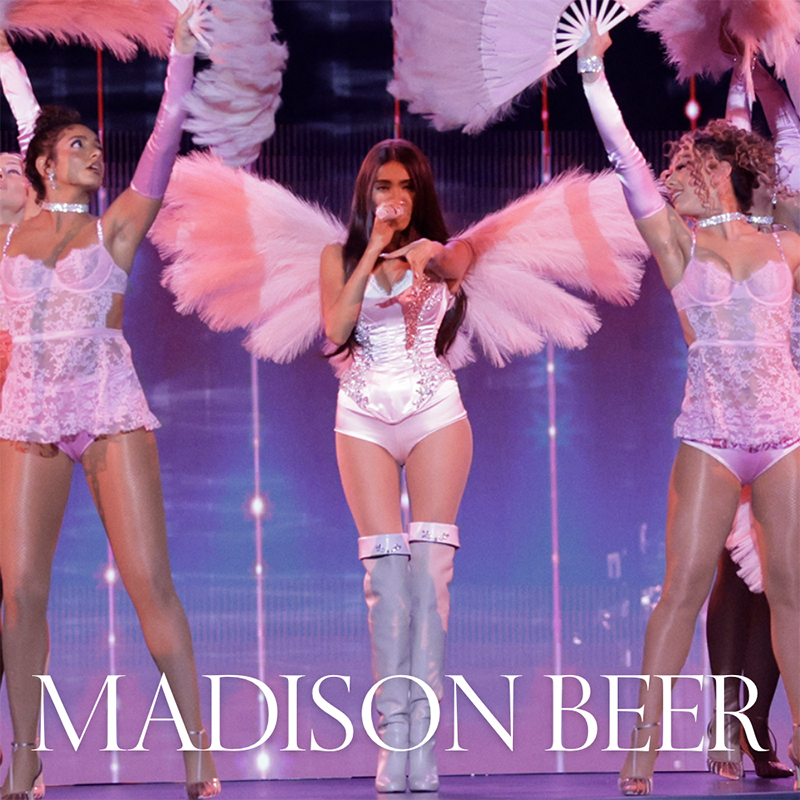
Photo: Madison Beer at the 2025 Victoria’s Secret Fashion Show. (2025). Victoria’s Secret. Retrieved on Oct. 26, 2025.
After years of backlash and cancellation, the Victoria’s Secret Fashion Show made a bold return in 2024 promising inclusivity, empowerment and modern beauty.
The brand hoped to win back Gen Z’s trust with athletes, diverse models and global performers on the runway.
TikTok user marketing.prose made a video discussing the authenticity of the show’s new direction and debated if it was relevant anymore. The video stirred up a question that many of the show’s viewers are now asking: Is the company’s new shift a reflection of true evolution, or just a polished PR stunt for redemption?
The Victoria’s Secret Fashion Show, also known as the “Super Bowl for women,” made its return in 2025 after years of controversy and reinvention. What was once a global spectacle of glitz, feathers and fantasy was canceled in 2018 after the show caught severe backlash for its unrealistic beauty standards and lack of diversity. Now, with a new focus on inclusivity and empowerment, Victoria’s Secret is trying to reclaim its cultural spotlight.
Victoria Secret made its return in 2024 with a new rebrand to balance glamour with inclusivity. This year was the first live show with major names and performances in seven years.
The 2025 casting included the “industry standard” models and veterans such as Hadid sisters, Irina Shayk and Imaan Hammam. Popular athletes, including Angel Reese and Suni Lee, also made an appearance.
As an attempt to stray from the show’s traditional ways, more women of color and plus-size models like Paloma Elsesser, Anok Yai, Ashley Graham and Precious Lee took the stage. Musical icons like Missy Elliott, Madison Beer and Karol G showed out with incredible performances.
The iconic angel wings made a comeback this year – but with a twist. Many of the “wings” were composed of lighter materials, abstract shapes and sculptural designs that looked more like art than costume. Every pair was more tailored to each model’s outfit and personality.
The show was streamed on Amazon Prime and YouTube, making it more accessible and appealing to its targeted younger audience. This streaming choice faced backlash, however, as some viewers felt that it was less exclusive and underwhelming.
The show was met with very mixed emotions from the media. A lot of people loved the inclusive casting and modern energy, feeling that it was past time for this shift.
On the other hand, it was thought that the show was too brand-driven and lacked authenticity. This shift was perceived as “forced” by many viewers and was believed to be a PR move. Nostalgia surrounding the brand blinded much of the media and made them less open to the new theme.
The attempt to embrace diversity and inclusivity sparks questions about body image and representation. This is a shift that a lot of companies try to make to win back Gen Z’s trust and to reshape their perception to the public- but does this make people feel seen, or is it just performative?
The show’s return was a blend of nostalgia with new ideas including diversity, individuality and modern beauty. For a Gen Z audience, the 2025 Victoria Secret Fashion Show represents a broader shift in media: how companies are adapting to ever-changing cultural values while trying to stay relevant.
The 2025 Victoria’s Secret Fashion Show proved that even a brand once known for perfection and exclusivity can try to evolve with the times. That being said, the authenticity of such a major shift leaves the audience with one burning question: Is this revival genuine progress, or just marketing dressed as empowerment?