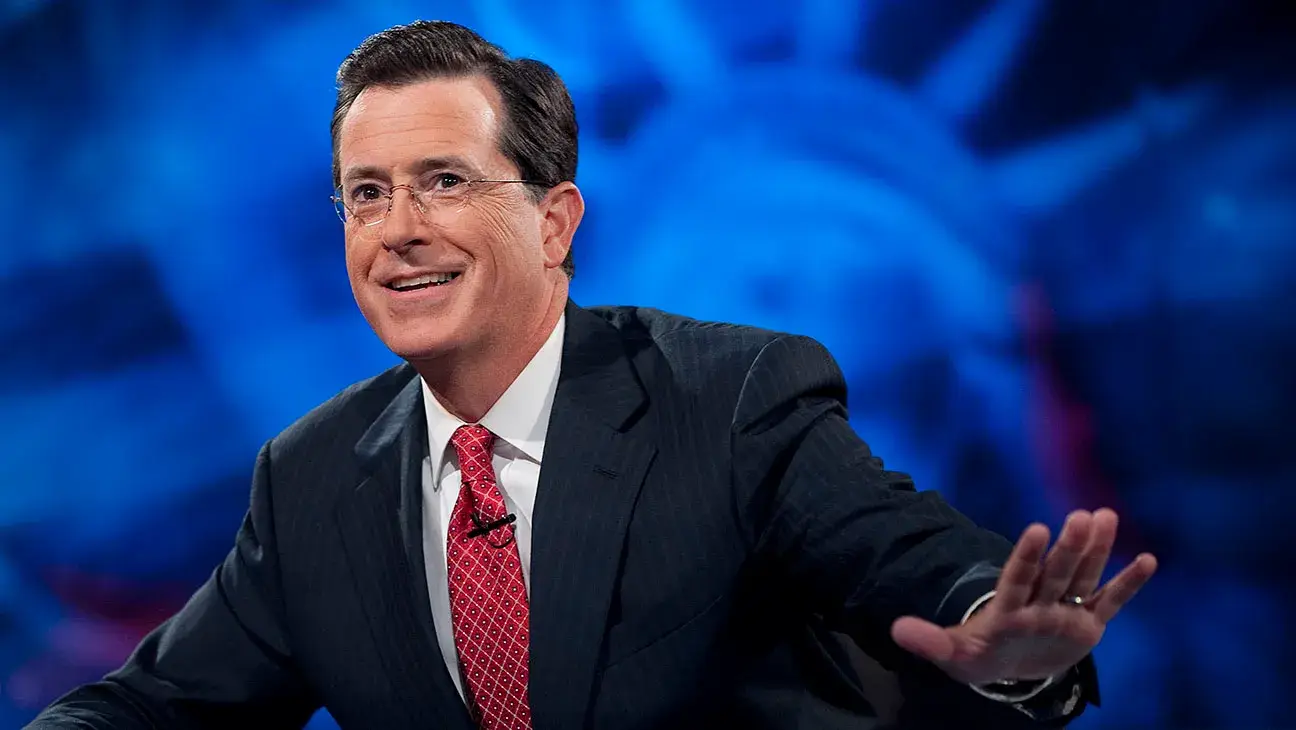
Steven Colbert appears on live television, September 8th, 2010. Photo credit: Scott Gries/PictureGroup
Late-night television shows have been under fire during President Trump’s administration.
It’s always been dangerous to laugh at powerful people. Comedians know this better than anyone, as they have been policed for using controversial language and shocking punchlines to chip away at the ivory towers for centuries.
But if that has always been the case, then why are American late-night television shows being targeted in recent months?
Several historic late-night show primetime slots are being threatened, cancelled or pulled from the air, leaving audiences feeling uneasy about their sources of entertainment and news.
The reasons for this are still unclear, but many are quick to point out the administration’s interference with these network television shows.
This summer, when CBS announced its cancellation of The Late Show with Stephen Colbert, their official statement clarified that the decision was financial and had nothing to do with Colbert’s political commentary.
However, fans of the show and other comedians were skeptical of this answer.
Many questioned the reasoning behind The Late Show’s cancellation, as the timing of this news corresponded with comments from Colbert about President Trump and his second term in office.
CBS’s statement has been further scrutinized after ABC pulled Jimmy Kimmel Live off the air after Kimmel commented on Charlie Kirk’s assassination. Since his hiatus, the show has returned, but these late-show controversies are not isolated incidents.
President Trump celebrated The Late Show’s cancellation, communicating his enthusiasm on social media. He even went so far as to call for further cancellations of late shows following Kimmel’s hiatus.
The president’s response to these attacks on comedy and free speech should not be taken lightly.
This suppression of comedy in the states parallels that of other comedians whose governments have barred performances criticizing federal policy and administration.
If the president can call for the termination of any late-night show, who’s to say that’s where the issue ends?
Many fascist regimes target journalism and comedy because they work to provide accessible information for the masses. If networks allow President Trump to bully them into submission, that is the first step in the direction of authoritarianism.
Laughing at powerful people, like presidents, can give the masses the perspective to view the ivory towers as unworthy of their power. That mindset, brought about through humor, can topple corrupt systems overnight.
Although America is in uncharted waters with its late-night television, there are several comedians, creatives and organizations speaking out against this infringement of free speech.
The Writers Guild of America (WGA) was quick to shame these cancellations and stand in solidarity with Kimmel and other late-show hosts.
Even former president Barack Obama chimed in and pointed out Trump’s complaints about cancel culture while simultaneously calling for these shows’ cancellations.
It is telling that a previous president is calling out the behaviors of the current administration, only bringing more attention to this clear stunt to eradicate any criticisms or outcries platformed by late-night television.
Regardless of the response, it cannot be understated that America’s laughs should not be policed.
Late-night shows and hosts must be allowed to express their concerns and feelings towards their government because they are U.S. citizens.
Anyone who disagrees must understand that, at the end of the day, it’s just a joke. Right?