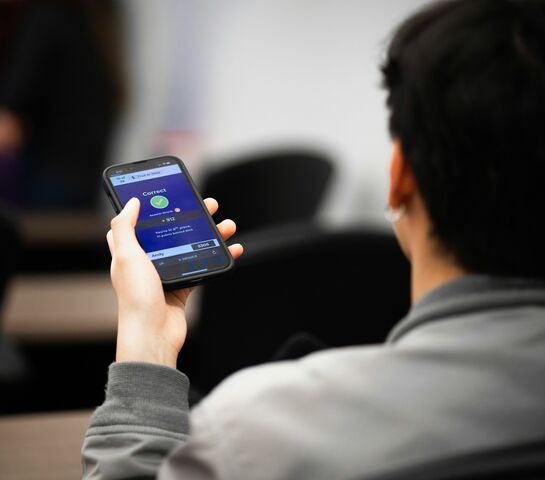
Student using a phone in a classroom. Photo Credit: John Smith on Unsplash
No phones? No problem! Georgia is cracking down on the usage of cell phones in school to prevent distractions in the classroom.
The Distraction-Free Education Act is what lawmakers in Georgia put into place in attempt to keep students heads out of their phones and into their studies. This law will go into full effect in July of 2026, prohibiting all personal electronics, from smart watches to cellphones, to be used during school hours.
Some schools in Georgia are already starting to enforce stricter rules regarding cell phones to prepare students. Whether it’s having students leave them in their lockers or backpacks from “bell to bell,” to not having students bring their phones to school at all.
Some schools are even investing in lock pouches for students to keep their phones in. Will this new Act work for students? Will stripping students of their personal cellular devices during school hours be beneficial to the learning process or will it be detrimental to the safety of kids? Do students really need their phones in school?
“It’s very unlikely to have negative impact.” Professor at Kennesaw State University, Tim Kersey stated. “The Goal is to encourage better attention in the class room, and it probably will to some degree, but I believe that the majority of the success building behaviors are developed outside of the classroom.”
When asked if he thinks this act will affect students behavior in college, Kersey said, “I’m optimistic that this policy might lead to some good results after a few years.”
“I don’t know that it’s going to fundamentally change how kids are.” Kersey’s perspective on the phone ban highlights both the potential benefits and limits of the new law, leaving questions open about how much of an influence this will truly have on students.
Contrary to popular beliefs, some students think that banning phones during school is a good idea, and will make school a better environment to learn. Tavaris Gregg, a 15 year old student at Buford High School, is in favor of the phone ban and thinks it will be beneficial to students. “I think the phone ban will help with focus in school,” Tavaris said.
“It will help students with the urge to always pull their phones out during class and use them to help with assignments and tests when they’re not supposed to.” Tavaris’s views on the phone ban shows that not all students are opposed to not having their phones during school hours.
They are aware that because of phones, some students have developed a habit of relying heavily on technology to complete assignments for them, and this law will help students stay on task.
While some students think this phone ban will be beneficial, 12-year-old Rebecca Johnson from Osborne Middle School, says that she wants her phone back!
“I’m not happy with the phone ban and I want my phone back,” Rebecca said. “I would rather have my phone in school with me so I can text my mom or my sister if I need help with something.”
With the rise of school gun violence in this country some students feel more safe having their phones on them. They find comfort in knowing that their loved ones are only a call or a text away.
As the 2026 deadline approaches, schools all across Georgia will continue shaping how they enforce this phone ban. Whether it leads to stronger focus and study habits or more frustration from students, the law is certain to reshape how students navigate through the school day.